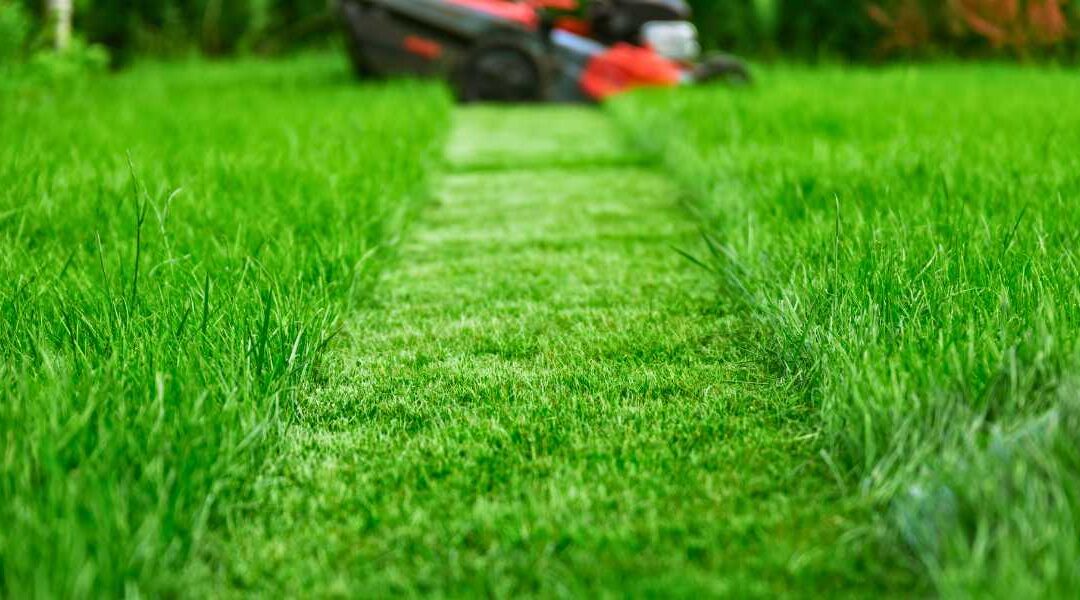
If you’d like your lawn maintained with the right timing through the seasons, our team can help you find a schedule that supports long-term health. Explore our ongoing lawn maintenance services.
A Simple Question That Shapes Lawn Health
“How often should I mow my lawn?”
In Seattle, the answer depends less on preference and more on how grass actually grows through the seasons.
Lawn care here isn’t static. Growth patterns shift with rainfall, temperature, and daylight. And mowing frequency plays a direct role in how turf responds over time.
When mowing aligns with growth, lawns stay denser, healthier, and more resilient. When it doesn’t, stress begins to build, sometimes gradually, sometimes all at once.
Why Mowing Frequency Matters
Mowing isn’t just about appearance. It directly affects how grass grows.
A widely accepted guideline in turf care is the “one-third rule”: removing no more than one-third of the grass blade at a time. When more is cut at once, the plant experiences stress.
Over time, that stress can lead to shallower roots, thinning turf, and increased vulnerability to weeds and moss. In Seattle’s climate, where moisture and shade already influence lawn performance, these effects tend to show up more quickly.
What Happens During Seattle’s Growing Season
In the Pacific Northwest, lawn growth isn’t evenly distributed throughout the year.
Spring brings the most rapid growth, especially from April through early June. A second, smaller surge often returns in early fall as temperatures cool and moisture increases again.
During these periods, grass can grow quickly enough that waiting two weeks between cuts often means removing too much at once. Even if the lawn looks manageable on the surface, the plant itself may be under strain.

Not sure what mowing schedule fits your lawn?
Weekly Mowing: Supporting Consistent Growth
During peak growing periods, weekly mowing tends to align best with how grass naturally develops.
With smaller, more frequent cuts, the lawn maintains a steady appearance while avoiding unnecessary stress. Over time, this approach supports thicker turf, stronger root systems, and better resistance to weeds.
It also allows for more consistent adjustments as conditions change—something that becomes especially valuable in Seattle’s variable spring weather.
Biweekly Mowing: A Practical Compromise
For many homeowners, biweekly mowing feels more realistic.
It can work well outside of peak growth periods, particularly in summer when grass naturally slows down. It also aligns with different priorities—whether that’s budget, usage, or a more relaxed approach to lawn care.
During periods of rapid growth, though, biweekly mowing often leads to larger cuts. This can result in temporary yellowing, heavier clippings, and gradual thinning over time.
It’s not the wrong approach—it simply produces different results.
The Influence of Rain and Moisture
Seattle’s climate adds another layer to mowing decisions.
Frequent rain can accelerate growth while also making lawns harder to mow. Wet grass doesn’t cut as cleanly, and delays due to weather can quickly push a schedule beyond the ideal window.
When that happens, even a well-planned routine can become inconsistent—making timing just as important as frequency.

Adjusting Through Summer and Fall
As summer arrives and rainfall decreases, lawn growth slows. At this stage, mowing frequency can often be reduced, especially if irrigation is limited.
Height becomes more important than timing. Keeping grass slightly taller helps shade the soil, retain moisture, and support deeper roots during dry periods.
In early fall, as moisture returns, growth picks up again. This is where a more consistent schedule can help the lawn recover from summer stress and regain density.
Finding the Right Balance for Your Lawn
Most Seattle lawns benefit from a flexible approach rather than a fixed schedule.
Weekly mowing during peak spring and fall growth tends to support the healthiest results. In summer, frequency can adjust depending on conditions. In winter, mowing becomes minimal as growth slows.
What matters most is aligning care with how the lawn is actually behaving—not just the calendar.
A Long-Term Perspective on Lawn Care
Over time, mowing habits shape how a lawn performs.
Consistent, well-timed mowing supports thicker turf, stronger roots, and fewer long-term issues. Less frequent mowing can still maintain a functional lawn, but may lead to gradual thinning or increased moss pressure.
Both approaches can work—depending on expectations. The difference lies in how the lawn evolves over the years.
A More Intentional Way to Maintain Your Lawn
In Seattle, lawns respond best to care that adjusts with the seasons.
At Seattle Sustainable Landscapes, we approach mowing as part of a broader system—one that considers soil health, moisture, and long-term performance alongside appearance.
Because small, consistent decisions tend to shape the landscape more than occasional corrections.
If you’d like a lawn care approach that adapts to the seasons and supports long-term health, we’re here to help. Schedule a consultation and explore our maintenance options.