Heatwaves can quickly expose weaknesses in a lawn. When grass has to grow in shallow roots, compacted soil, or poor organic matter, it often turns brown first. Thus, I'll share my knowledge with you so that you can maintain a healthier lawn that handles stress comfortably.
At my landscaping company, Seattle Sustainable Landscapes, we believe the best way to prepare for summer heat is to build a stronger lawn throughout the year. So rather than reacting once the temperatures climb, prepare for it.
Keep reading to discover the five strategies I recommend to help your lawn thrive during Seattle's hottest weeks. Let's create a landscape that's naturally more resilient through healthy soil, thoughtful irrigation, and biodiversity.
1. Build Deep Roots with Cycle and Soak Watering
One of the biggest mistakes homeowners make is watering too quickly. When water is applied faster than the soil can absorb it, it runs off the surface instead of reaching the root zone where it's needed most. That's why our irrigation specialists often recommend Cycle and Soak watering.
Instead of running your irrigation system continuously, Cycle and Soak divides watering into several shorter cycles with rest periods in between. This allows water to infiltrate the soil slowly, encouraging deeper root growth while reducing runoff.
Over time, deeper roots create a lawn that's better able to withstand drought and summer heat.
Why deeper roots matter
Grass with deep roots can access moisture stored farther below the soil surface, making it naturally more resilient during extended dry periods.
2. Nurturing Soil is Your Lawn's Best Defense
Beneath every thriving lawn is a living ecosystem filled with beneficial fungi, bacteria, earthworms, and microorganisms that help cycle nutrients and improve soil structure.
Supporting this natural soil biology allows the lawn to absorb water more effectively and better tolerate environmental stress.
At Seattle Sustainable Landscapes, we focus on building soil health rather than simply feeding the grass. And we do
Feed Your Lawn Organically
We use organic fertilizers, humic acid, and soil amendments like diatomaceous earth to support stronger root systems and improve drought tolerance over time.
Unlike many synthetic fertilizers that encourage rapid top growth, organic soil programs help develop healthier plants from the ground up.
3. Encouraging Biodiversity Makes Lawns More Resilient
There are benefits to a lawn that has more than just grass. So we advise adding microclover, which creates a more diverse ecosystem that gains several important advantages:
- Naturally fixes nitrogen into the soil
- Reduces fertilizer needs
- Stays greener during dry periods
- Supports pollinators when allowed to flower
- Blends beautifully with cool-season turf
Even a small percentage of microclover can improve the long-term resilience of your lawn.
4. Prepare Before the Heatwave Arrives
If you thoughtfully care for your lawn in spring and summer, you'll be able to enjoy it year-round.
One of the most important lessons we've learned is that you can't build resilience overnight. The lawns that perform best during extreme summer weather are usually the ones that have been cared for consistently throughout spring.
That means:
- Building healthy soil
- Watering deeply
- Encouraging deep roots
- Feeding organically
- Improving biodiversity
Preparation is what allows a lawn to recover more quickly after periods of stress.
5. Accept that Dormancy Is Natural
We need to admit that Seattle lawns are primarily made up of cool-season grasses. So during extended periods of hot, dry weather, these grasses may naturally enter dormancy if they aren't irrigated.
Dormancy isn't necessarily a sign that the lawn is dead. It's a survival strategy that allows your grass to conserve energy until cooler temperatures and autumn rains return.
Understanding this natural cycle can help homeowners make more informed watering decisions while avoiding unnecessary stress on their landscapes.
If you want to get more nerdy about it, the Washington State University Extension provides excellent educational resources on cool-season turfgrass and how lawns naturally respond to drought and summer heat.
A Healthy Lawn Supports a Healthier Neighborhood
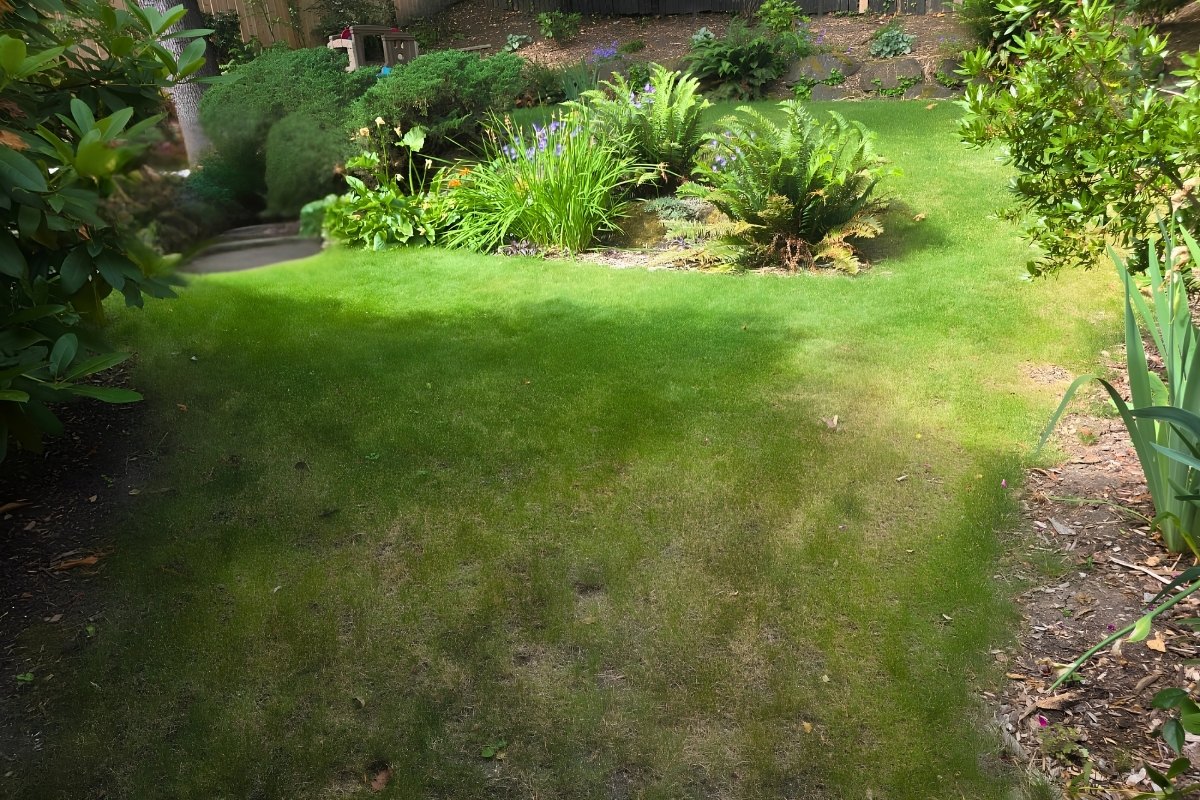
While native plants are better adapted to our ecosystems, healthy lawns can also contribute to Seattle neighborhoods. They cool outdoor spaces, reduce erosion, and absorb rainfall more effectively.
At Seattle Sustainable Landscapes, we help homeowners align their personal goals and visions with thoughtful irrigation and sustainable practices that make their yards thrive with less resource use.
Whether you need help improving your irrigation system, building healthier soil, or creating a more drought-resilient lawn, our team is here to help.
Contact Seattle Sustainable Landscapes to learn how sustainable lawn care can prepare your landscape for every Seattle summer.