
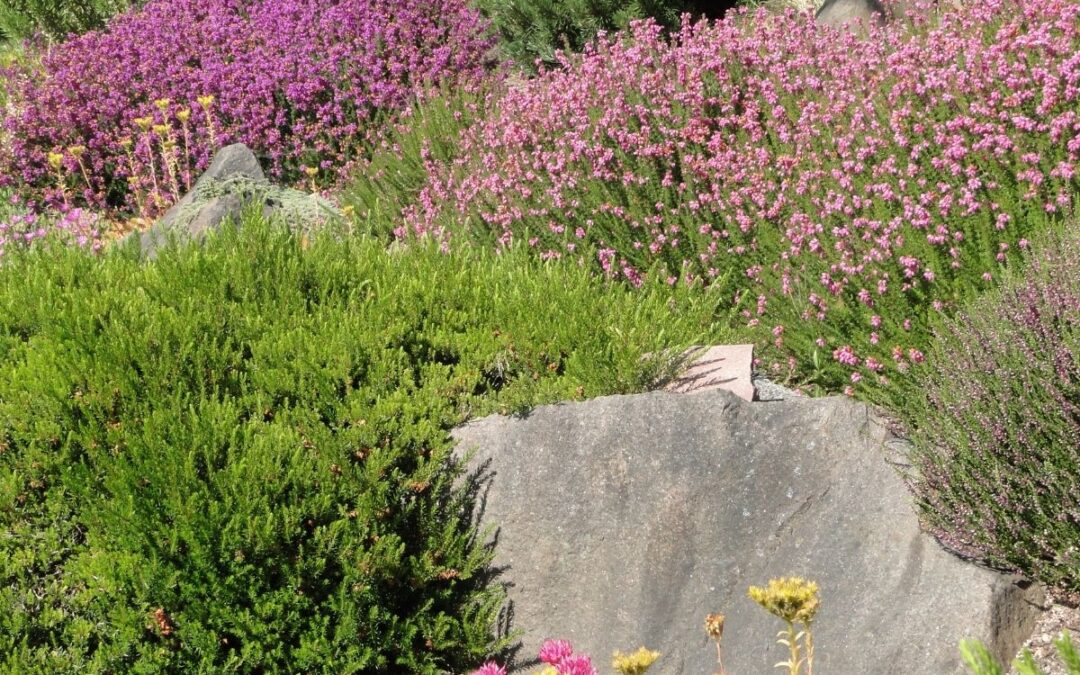
Seattle may be known for its rainy winters, but our summers are becoming increasingly dry due to shifting climate patterns. As a result, drought-tolerant landscaping is not only a smart environmental choice—it’s a practical one, too. At Seattle Sustainable Landscapes (SSL), we specialize in creating outdoor spaces that remain vibrant, beautiful, and functional throughout the dry months with minimal water use.
Here’s how we design drought-resilient landscapes tailored specifically to the Seattle region.
Why Drought-Tolerant Landscaping Matters in Seattle
While Seattle still receives significant annual rainfall, the distribution is heavily weighted toward fall, winter, and early spring. By late June, the rain slows dramatically, and July and August are typically bone dry.
This seasonal drought can:
- Stress lawns and thirsty ornamental plants
- Lead to water restrictions or high irrigation costs
- Increase maintenance and reduce plant health
That’s why designing for drought is key to sustainable landscaping in the Pacific Northwest.
Core Principles of Drought-Tolerant Design
1. Plant Selection
Choosing the right plants is the most impactful step. At SSL, we focus on:
- Pacific Northwest natives: Many evolved to survive dry summers, like:
- Oregon grape (Mahonia)
- Evergreen huckleberry (Vaccinium ovatum)
- Yarrow (Achillea millefolium)
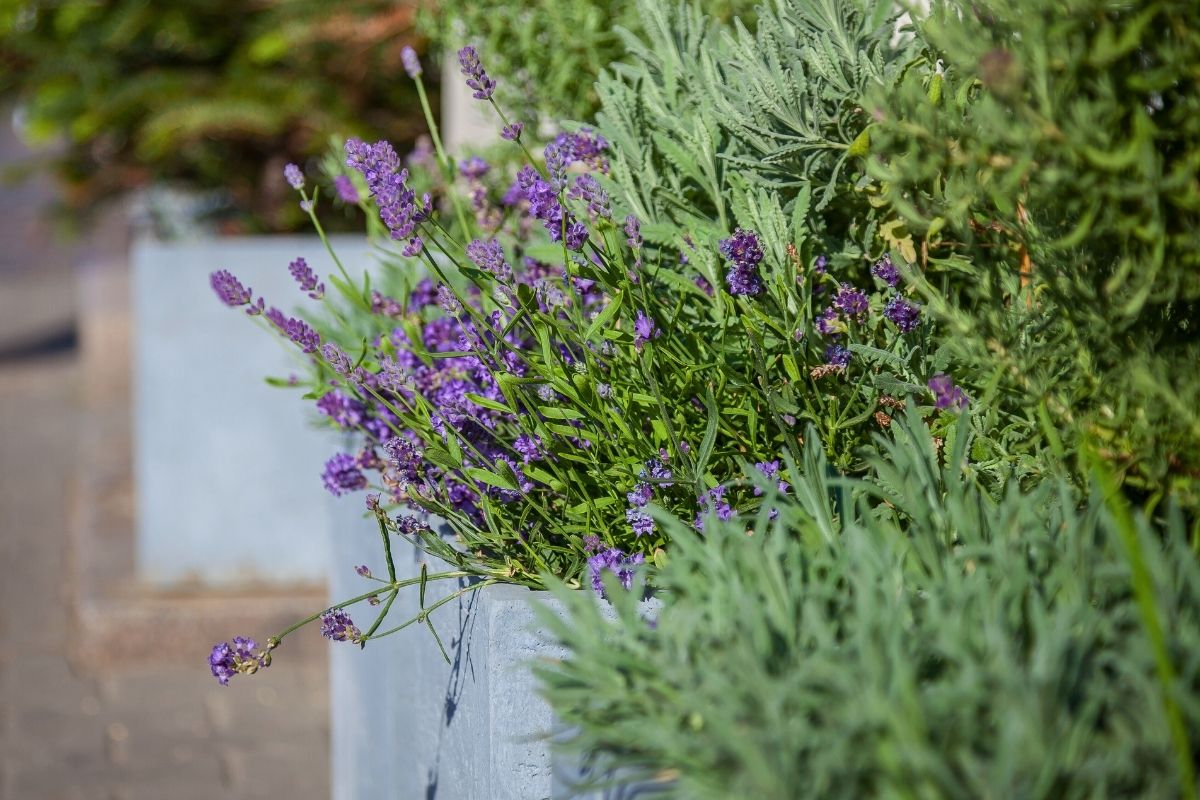
- Mediterranean species: Plants like lavender, rosemary, and rockrose thrive in our summer-dry climate.
- Grasses and sedges: Blue fescue, carex varieties, and tufted hair grass are ornamental and hardy.
2. Group Plants by Water Needs
This technique, called “hydrozoning,” ensures that high-water-use plants are clustered near irrigation sources, while drought-tolerant ones occupy drier zones.
3. Improve the Soil
Healthy soil holds water longer. We amend our planting beds with compost, mulch and natural additives to:
- Increase water retention
- Suppress evaporation
- Improve root development
- Diatomaceous Earth
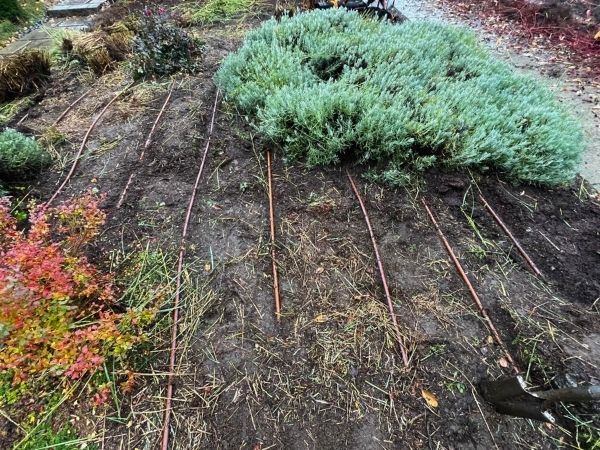
4. Smart Irrigation Systems
Drip irrigation, moisture sensors, and programmable timers ensure water is used efficiently and only when necessary. We often design systems that can be easily adjusted as plants mature and establish deeper roots.
5. Minimize Lawn Area
Turf grass is one of the thirstiest features in a traditional landscape. We often replace or reduce lawn areas and instead design:
- Gravel seating areas
- Mulched planting beds
- Native meadow zones
Design Features That Support Drought Resilience
- Permeable hardscapes: Allow water to percolate into the soil, reducing runoff and helping recharge groundwater.
- Rainwater harvesting: Rain barrels and cisterns collect water during the wet season for use during summer.
- Shade trees: Strategic tree placement can reduce evaporation and keep soil cooler.
- Mulching: One of the simplest, most cost-effective ways to conserve water.
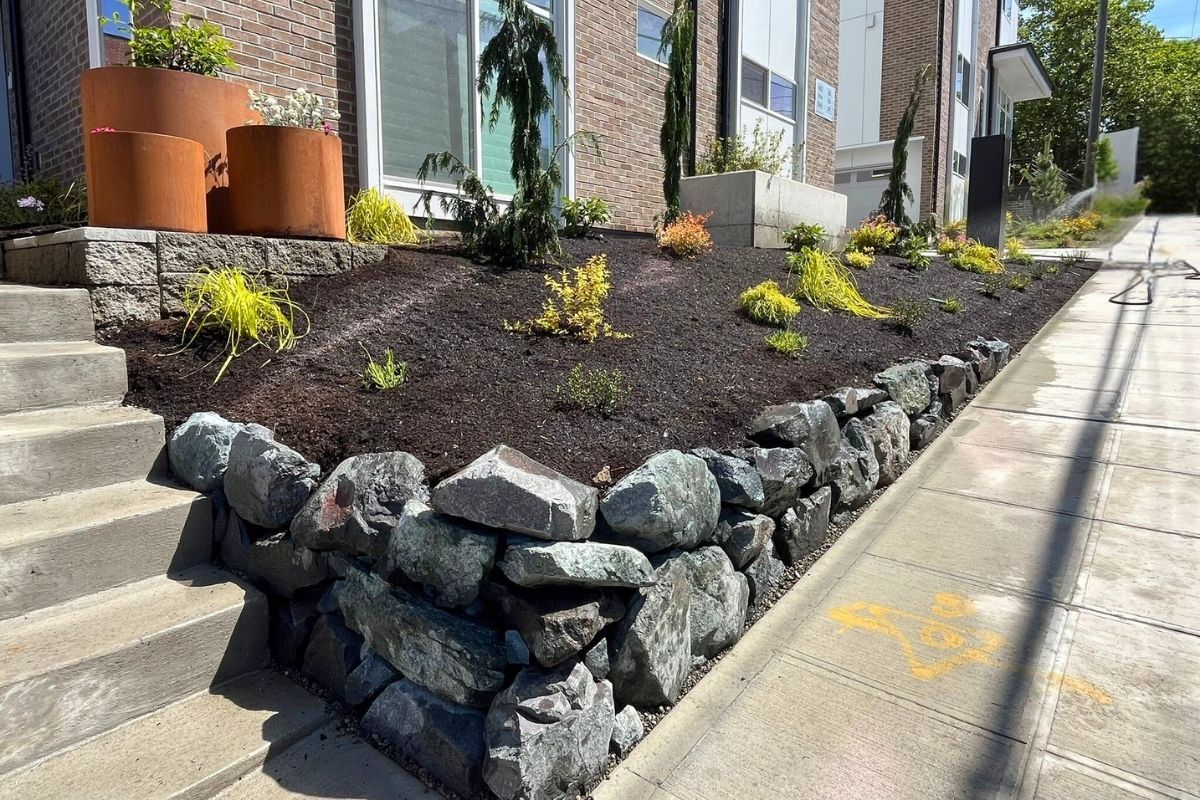
SSL’s Approach to Drought-Tolerant Design
At SSL, drought-tolerant doesn’t mean dull or dry-looking. We specialize in creating vibrant, colorful gardens that celebrate textures, seasonal interest, and ecological health—all while being water-wise.
Our designs for Seattle homeowners prioritize:
- Local adaptation
- Long-term plant success
- Lower utility bills
- Reduced maintenance
Whether you’re starting fresh or renovating an existing yard, we can help you create a landscape that handles Seattle summers with style and sustainability.
Final Thoughts: Water-Wise Landscapes That Last
With a little planning and smart design, your landscape can stay beautiful and resilient even during the driest months. At Seattle Sustainable Landscapes, we help homeowners turn summer drought into an opportunity for sustainable, long-lasting beauty.
Let us show you how a drought-tolerant design can transform your space and reduce your water use—without sacrificing style.