
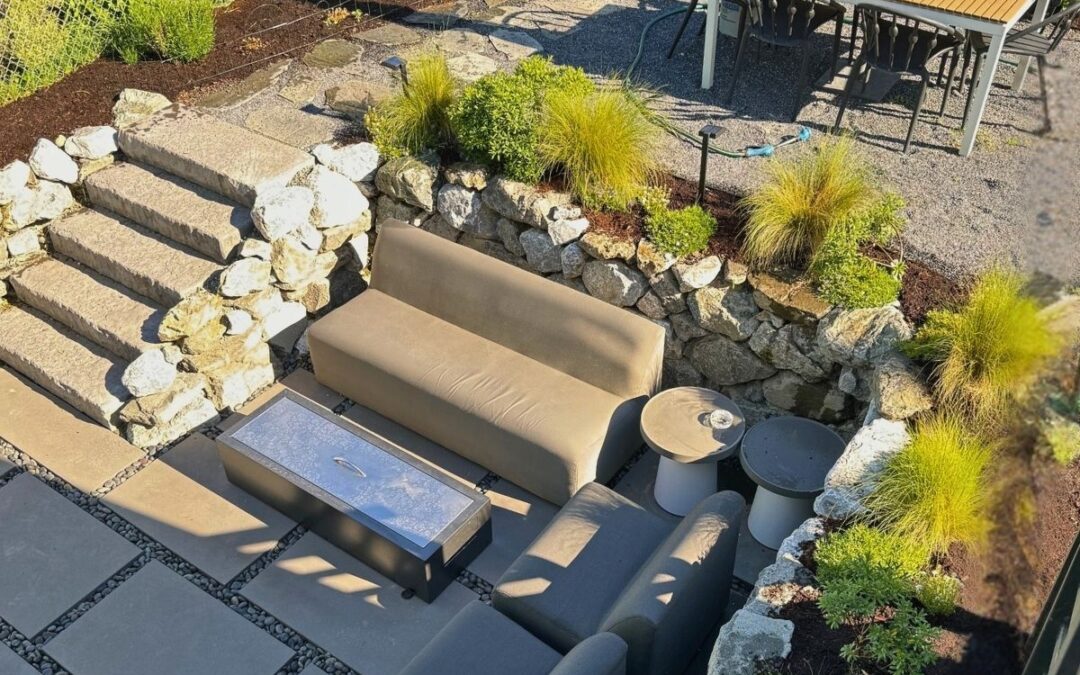
Designing a landscape that thrives in the Seattle Rain
Seattle is famous for its rain, and while the damp climate contributes to our region’s lush beauty, it also presents unique challenges when designing and maintaining a landscape. At Seattle Sustainable Landscapes (SSL), we believe that a smart design works with our climate—not against it—, and that is why is sustainable.
So how to create a landscape that doesn’t just survive the Seattle rain, but actually thrives in it? Let’s dig in.
Our Rain-Savvy Landscape Design Approach
Embrace the Rain: Design for Wet Weather
Seattle receives an average of 38 inches of rainfall per year, with most of it falling between October and April. Poor drainage, soggy lawns, and erosion are common problems for homeowners who haven’t accounted for the effects of prolonged rain.
Designing for rain helps you:
- Prevent pooling and flooding
- Protect foundations and structures
- Reduce maintenance and water damage
- Create healthy soil and thriving plants
- Support local ecology with smart stormwater solutions
Key Elements of Rain-Ready Landscape Design
1. Proper Drainage Planning
Water should move away from structures and into planned absorption areas. We personally include grading, swales, and French drains in many of our designs to direct rainwater where it can do the most good—or cause the least harm.
2. Rain Gardens
A rain garden is a shallow, planted basin designed to capture and slowly absorb stormwater runoff from roofs, driveways, and other impervious surfaces. These features:
- Filter pollutants from runoff
- Replenish groundwater
- Support native plants and pollinators
They are beautiful, functional, and often qualify for city stormwater credits.
3. Permeable Hardscapes
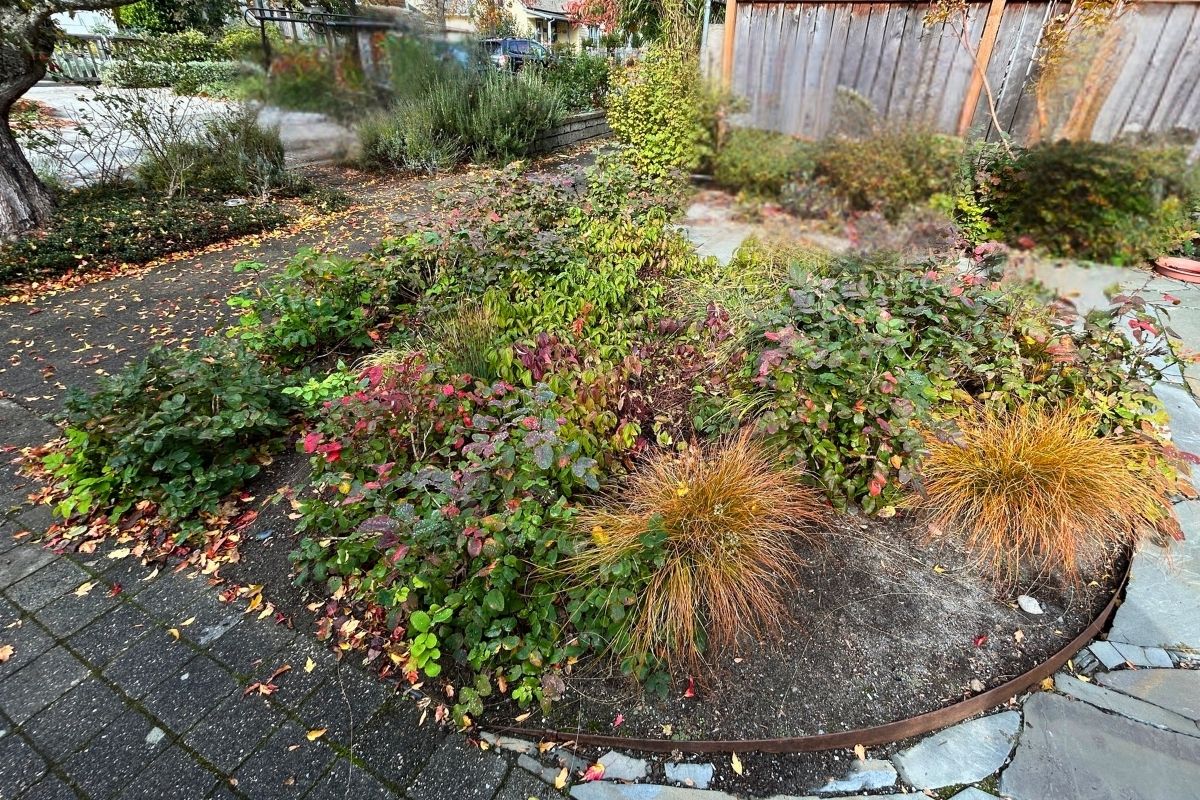
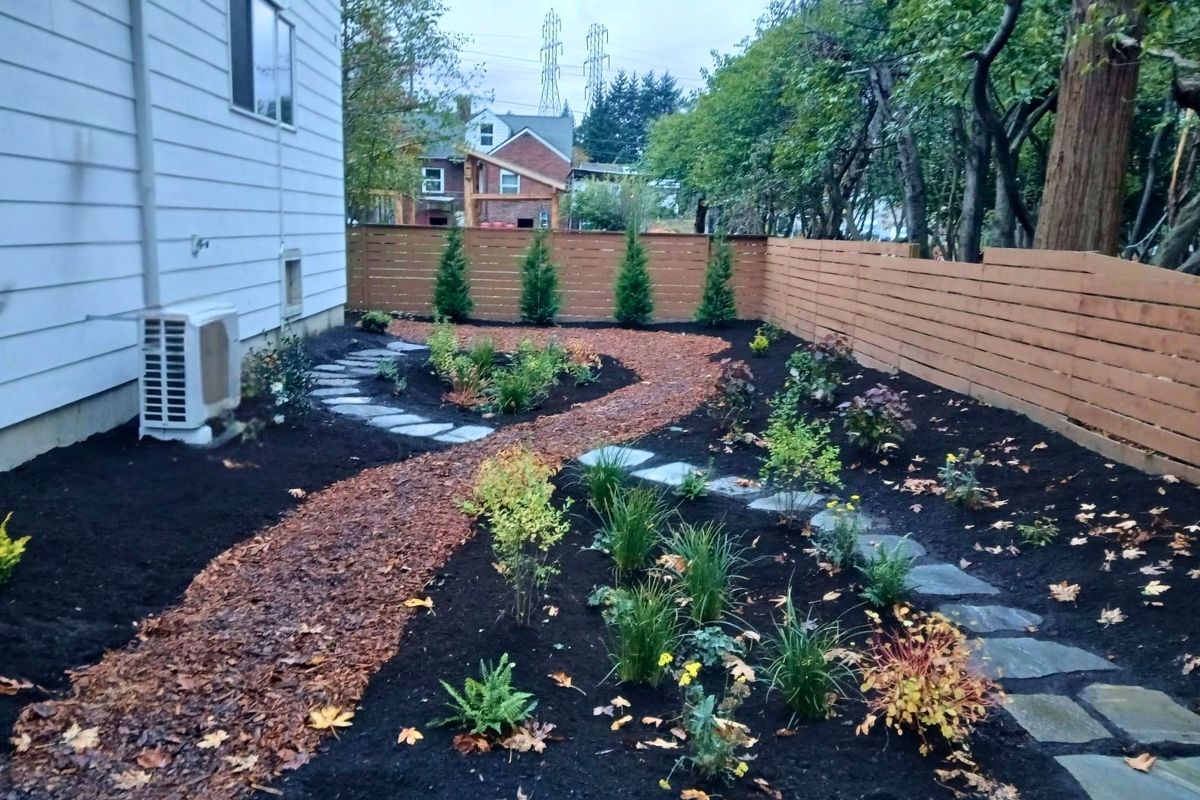
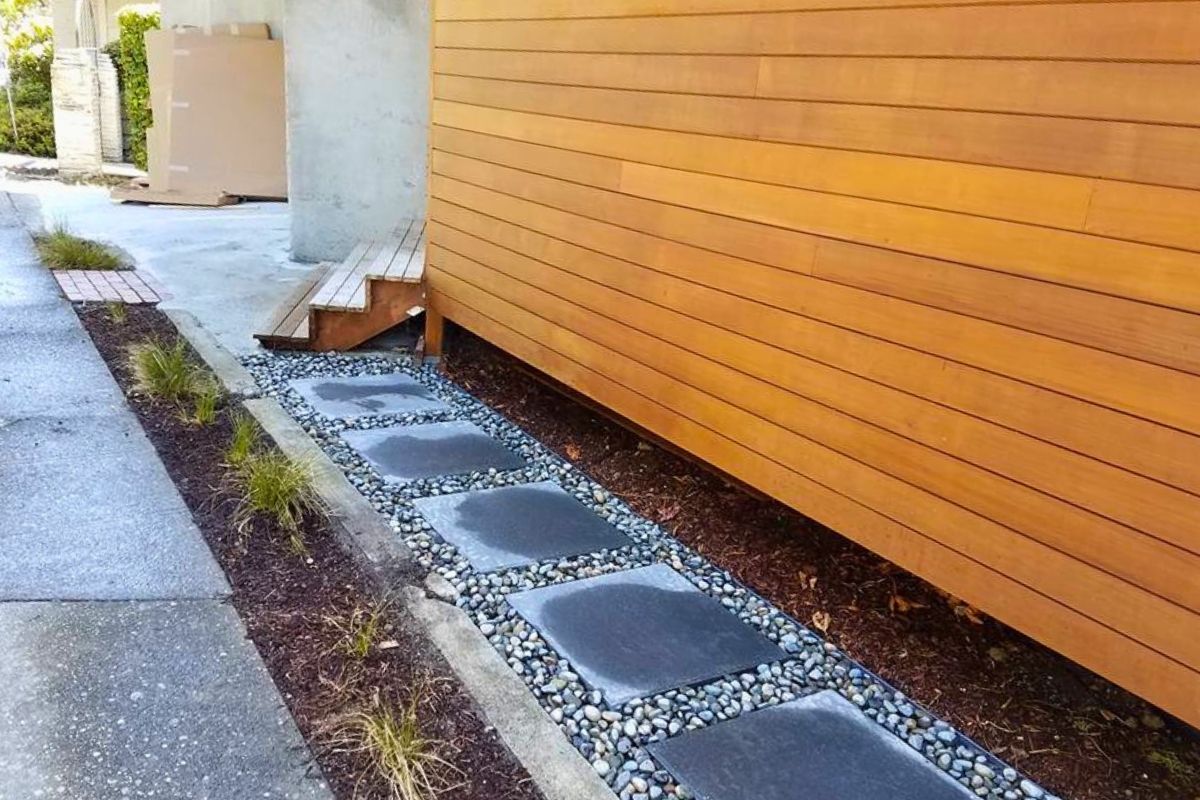
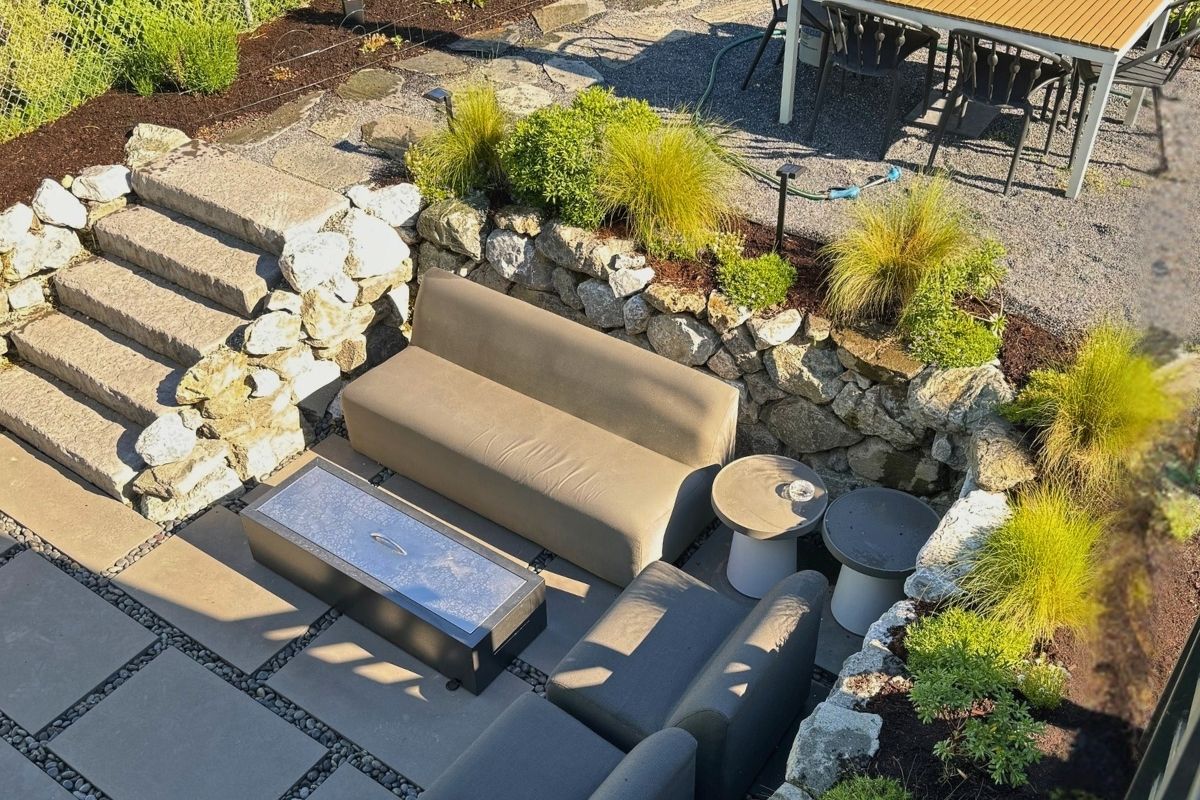
Instead of traditional concrete or asphalt, we use permeable pavers, gravel, and natural stone that allow water to seep into the ground below. Stepping stones instead of a solid pathway can help too! These materials reduce runoff and integrate seamlessly with Seattle’s natural aesthetic.
4. Healthy Soil = Better Absorption
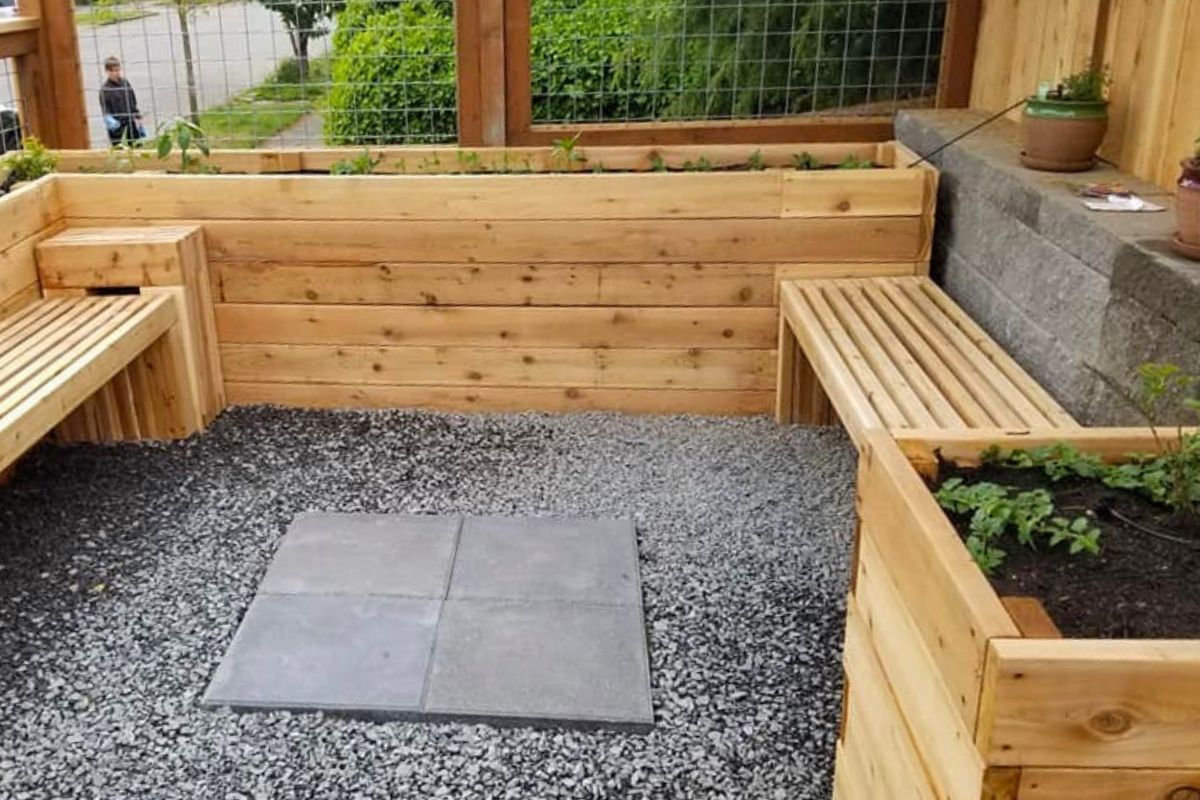
Healthy, well-aerated soil can absorb and filter much more water than compacted, clay-heavy soils. We amend soil during installation and recommend long-term mulching to build sponge-like organic content over time.
5. Strategic Plant Selection
Many Pacific Northwest natives are adapted to wet winters and dry summers. Some of our favorites include:
- Red twig dogwood (great in soggy areas)
- Sword ferns (shade-tolerant and moisture-loving)
- Pacific ninebark (ornamental and adaptable)
- Rushes and sedges (perfect for rain gardens)
Other Considerations
- Roof runoff: We often redirect downspouts to bioswales or rain gardens.
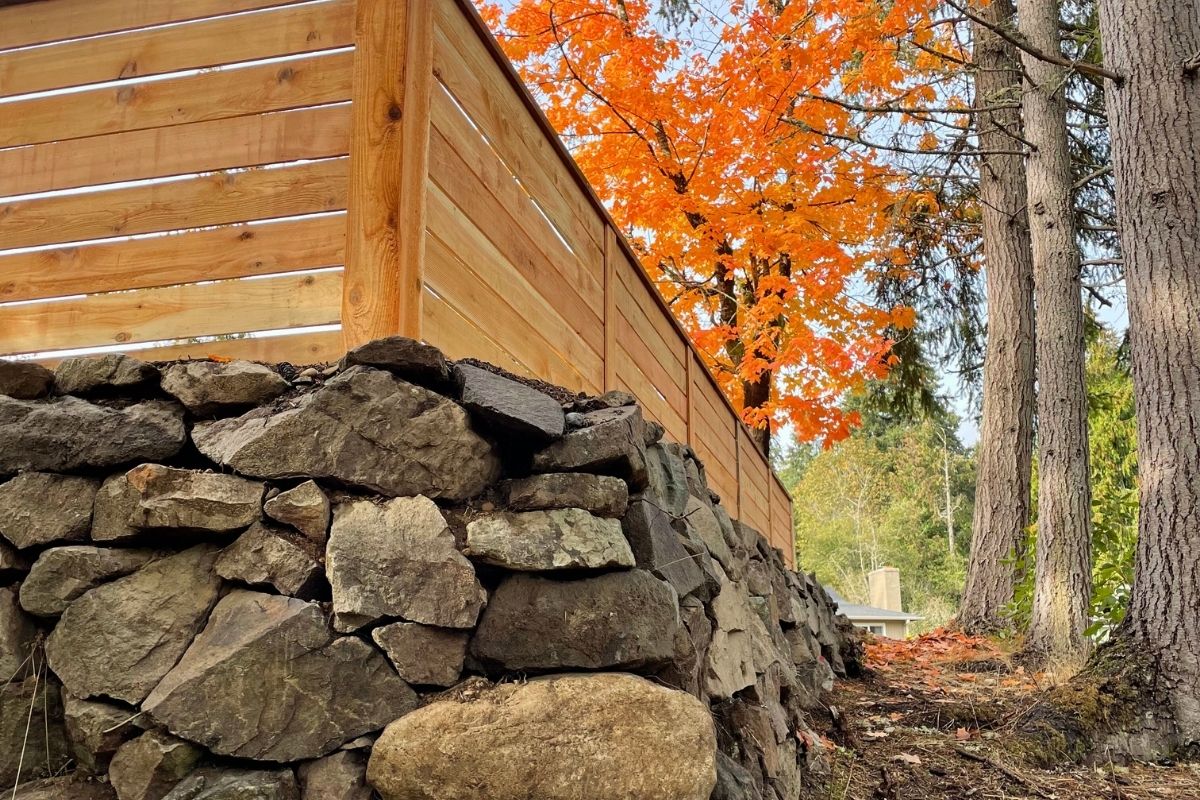
- Erosion control: Terracing, deep-rooted plants, and retaining walls help manage slope and reduce soil loss.
- Rainwater harvesting: Installing rain barrels or cisterns can help reuse rainwater for summer irrigation.
SSL’s Rain-Savvy Approach
We’ve designed and installed dozens of landscapes throughout Seattle that handle water beautifully. From rooftop gardens in Queen Anne to backyard bioswales in West Seattle, our team understands how to work with the region’s rainfall patterns to build resilient, attractive outdoor spaces.
Whether your yard turns into a mud pit every winter or you simply want to build a more eco-conscious garden, we can help you design a space that handles water naturally and beautifully.
Final Thoughts
A rain-smart landscape isn’t just good for your yard—it’s good for Puget Sound, your property value, and the environment. At SSL, we’re passionate about helping homeowners turn rain from a problem into an opportunity.
Ready to turn Seattle rain into an advantage?
Whether you’re dealing with poor drainage, erosion, or simply want a more resilient and sustainable yard, Seattle Sustainable Landscapes can help. Contact our team to design a landscape that works with the rain—not against it.