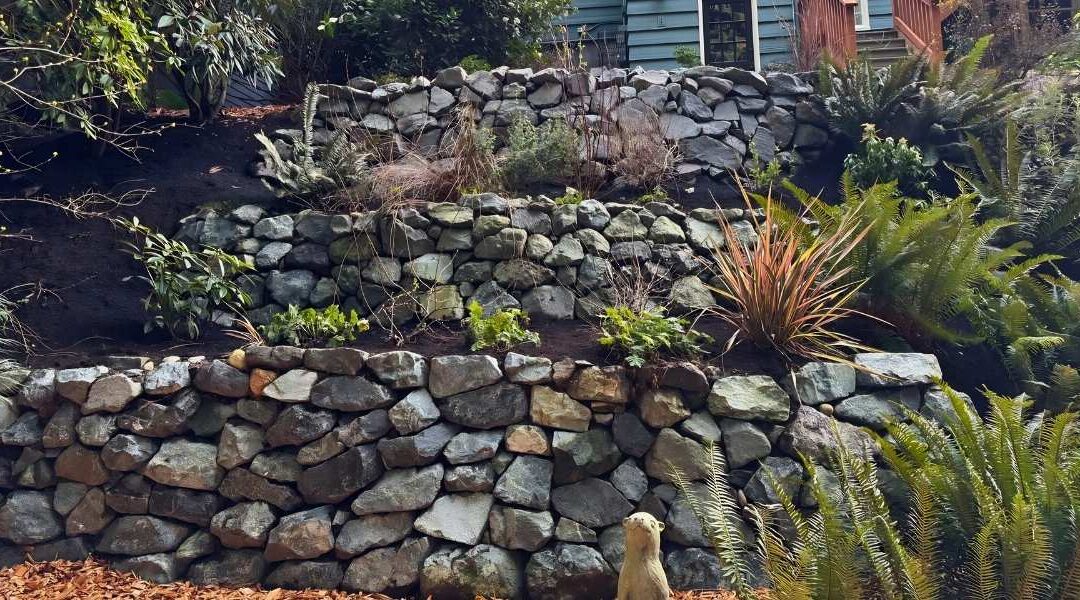
When a stone is placed well, it looks like it was never moved. At Seattle Sustainable Landscapes, we aim for landscapes where the granite, basalt, and weathered moss rock feel less like materials we brought in and more like features the site already had.
Natural stone does that. It carries weight, weathers slowly, and over time takes on the moss, lichen, and patina of the Pacific Northwest in a way nothing manufactured quite replicates.
Choosing the right stone, though, matters more than many people expect. The type of rock you select shapes everything: how a wall holds on a slope, how a path feels underfoot, how a boulder reads against a planting bed in winter when the garden is quiet.
What Makes Each Stone Different
We source many of our materials from trusted suppliers like Marenakos Rock Center, who offer high-quality, local and regional stone varieties ideal for residential landscapes.
We work primarily with four stone families in Seattle-area landscapes, and each one brings a distinct character to the ground.
Granite
Granite is the workhorse. It is among the hardest natural materials we use: dense, durable, and unfazed by Seattle's wet winters.
We reach for granite in:
- Retaining walls
- Steps and stair treads
- Boulders and seat rocks
- High-traffic paths
Its cool grays and speckled textures suit both modern and traditional gardens, and it develops beautifully with age.
Basalt
Basalt is the rock that feels most native here. Formed from cooled lava and found abundantly across the Pacific Northwest, it has a deep charcoal color and a natural columnar structure that makes it exceptional for vertical applications
- Stepping stones
- Vertical accent rocks
- Dry-stack retaining walls
- Water feature foundations
Its density makes it one of the most structurally reliable stones we use, and its dark tone creates a striking contrast against the greens and silvers of PNW plantings.
Weathered Stone
Weathered stone (moss rock) is the one that earns the most admiration on-site. These are stones that have spent years, sometimes decades, in the elements. Their edges are rounded, their surfaces already host moss and lichen, and when placed in a garden, they carry an immediate sense of maturity.
We use them as:
- Focal boulders in planting beds
- Natural retaining walls
- Loosely arranged on slopes for erosion control
- Anchors in naturalistic, forest-style designs.
In a Seattle garden shaded by Douglas firs, a well-placed moss rock looks less like a design choice and more like a gift from the site itself.
Sedimentary Rocks
Sandstone, quartzite, and other sedimentary stones round out the palette. Layered and often warmer in tone than igneous rock.
They work particularly well as:
- flagstone for patios
- Decorative cladding or veneer
Their natural split face adds texture and a handcrafted quality to rustic or artistic designs. In Seattle's wet climate, some sedimentary types benefit from sealing; a small consideration for a material that rewards with years of warm, earthy character.

Learn About Our Retaining Wall Services
Choosing Stone for Seattle's Climate and Conditions
The PNW is a particular place to work with stone. Rain, freeze-thaw cycles, and persistent moisture mean that durability and drainage are always part of the conversation. For structural applications — retaining walls, steps, and load-bearing features — basalt and granite are our first recommendations. Both resist weathering reliably and hold their integrity through the seasons.
For decorative or accent placements, weathered stone and sandstone offer more warmth and character, with the understanding that moss will find them quickly. In a naturalistic garden, that's often exactly what we want.
Seattle's rain and freeze-thaw effects on natural stone
Access is also a practical consideration that shapes stone selection more than most clients expect. Many Seattle properties have tight side yards, steep slopes, or limited access for equipment. In those situations, we focus on one- and two-person stones that can be placed by hand — a constraint that, when worked with thoughtfully, often produces more careful and intentional results than machinery would.
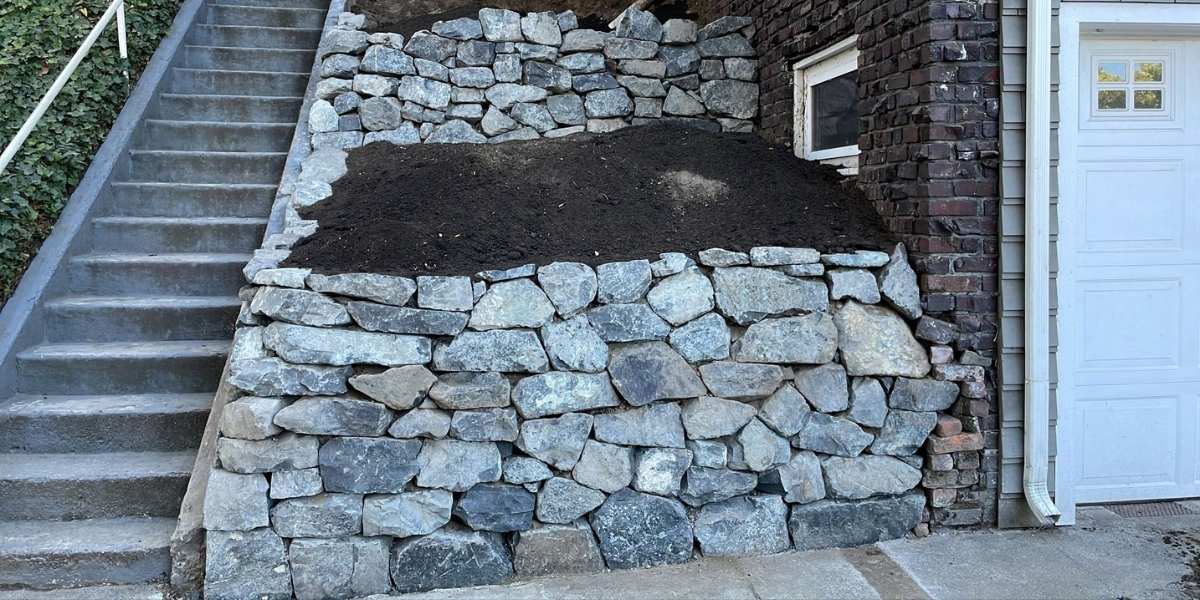
When stone and planting work together — basalt boulders edged with low-maintenance ground cover, granite steps softened by creeping perennials, moss rock anchoring a shade bed filled with ferns — the landscape develops a coherence that feels earned rather than installed.
At SSL, we use natural stone in a wide variety of projects, including:
- Dry-stack granite or basalt retaining walls
- Decorative moss rock boulders nestled in planting beds
- Basalt stepping stones weaving through shade gardens
- Weathered boulders placed on slopes for erosion control
Stone That Belongs
Natural stone is one of the few materials in a landscape that genuinely improves with time. The moss that finds basalt, the lichen that settles into granite, the way a weathered boulder slowly disappears into a planting bed — these are signs that a garden is maturing, not aging. In Seattle, where the climate encourages that kind of slow integration, stone is less a hardscape choice and more a long-term investment in how a space will feel ten or twenty years from now.
Whether you're thinking about a retaining wall for a sloped property, a stone path through a shade garden, or a single moss-covered boulder that anchors a planting bed, the right material is out there — and it's worth taking the time to find it.