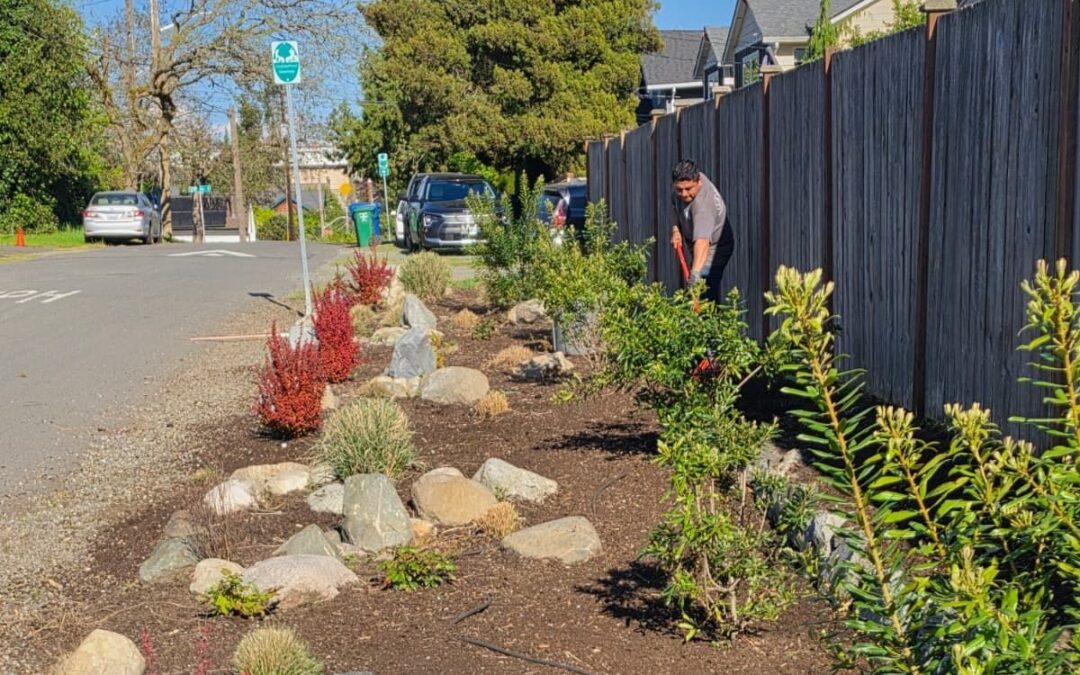
Spring comes gradually in Seattle. One week, the garden is still and quiet. Next, the hellebores are blooming, the sword ferns are pushing new growth, and the ground cover is filling in faster than expected.
It's a generous season. And a little attention early — before the garden gets ahead of you — makes everything that follows easier and more rewarding. These are the five tasks we come back to every spring, across every garden we care for in the Pacific Northwest.
See How We Care for Seattle Gardens Year-Round
1. Start with a Thorough Cleanup
Winter leaves its mark on every garden. In Seattle, that means fallen leaves, broken branches, matted ground cover, and the occasional slug — all worth addressing before new growth takes over.
Start by clearing debris from planting beds. Fallen leaves left too long can smother low-growing groundcovers and invite disease. That said, a light layer of leaf litter in a woodland bed is worth keeping — it insulates roots and feeds soil biology through the season.
Cut back any perennials left standing through winter. In the PNW, we often leave stems up for overwintering insects. By early spring, those stems have done their work. From there, cutting them back makes room for fresh growth and tidies the garden visibly.
Pull any early-season weeds while the soil is still soft. As a result, you'll spend far less time weeding in May and June — when everything is growing fast, and the weeds are competitive.
Get to know more about our seasonal cleanup service
2. Inspect and Restart Your Irrigation System
Irrigation is easy to overlook in spring. Seattle's rainy season does the work through winter. So, as the dry months approach, checking the system early gives you time to fix problems before the plants need it.
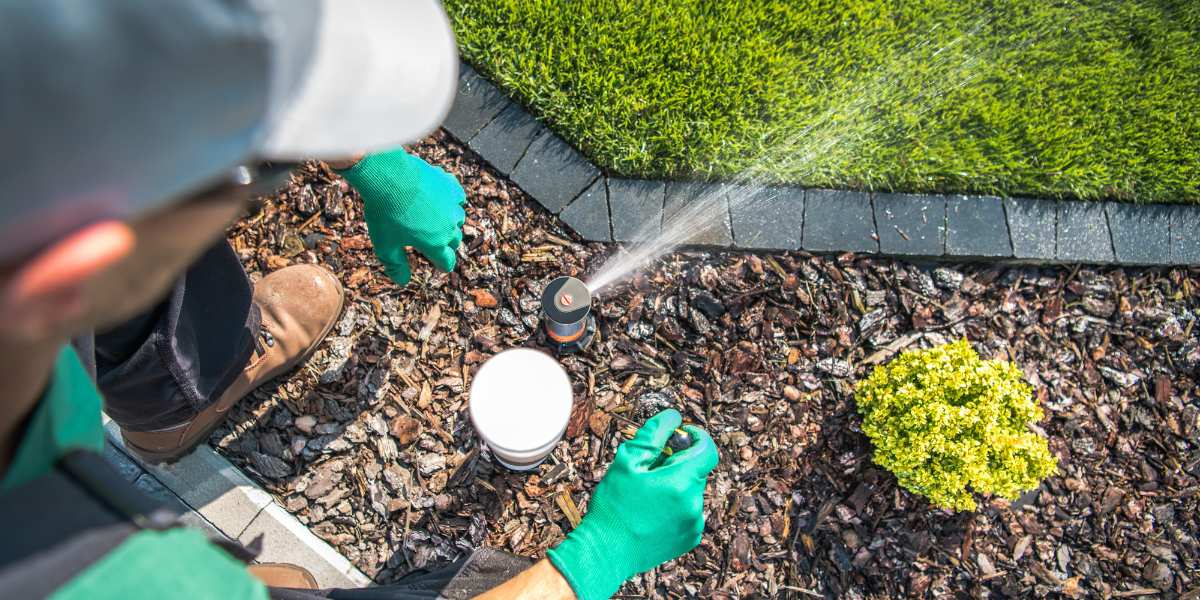
Walk each zone and look for cracked emitters, clogged drip lines, or heads that shifted over winter. In the PNW, freeze-thaw cycles can loosen fittings and move components subtly. Also, check the controller and confirm the schedule reflects spring conditions, not last August's settings.
Turn the system on zone by zone. Watch for uneven coverage, dry spots, or water pooling where it shouldn't. A short test run in March or April takes less than an hour. [Check Seattle's seasonal watering guidelines: an authoritative city resource that gives readers locally calibrated irrigation timing guidance, non-commercial and directly relevant to Seattle homeowners].
If the system needs repair or seasonal adjustment, it's worth addressing before the warm weather arrives.
3. Assess Your Hardscape
Winter is hard on stone, concrete, and wood. In Seattle, persistent moisture and freeze-thaw movement can shift pavers, crack mortar, and grow moss on surfaces that were clean in October.
Walk your paths, patios, and steps carefully. Look for pavers that rock underfoot — a sign the base material has shifted. Check retaining walls for any movement or leaning, especially on slopes where water drains behind the structure. Over time, small shifts become larger ones if left unaddressed.
Moss on hardscape is common here. In some gardens, it's a feature. In others — on steps or sloped paths — it creates a slip hazard. A simple scrub and application of a moss treatment keeps surfaces safe through spring.
Wooden elements — decks, fences, and raised beds — benefit from a visual inspection as well. Check for rot at posts and ground contact points. Spring is the right season for staining or sealing before UV exposure increases in summer.
Book a pressure washing to reveal bright surfaces once again
4. Refresh Your Ground Cover and Planting Beds
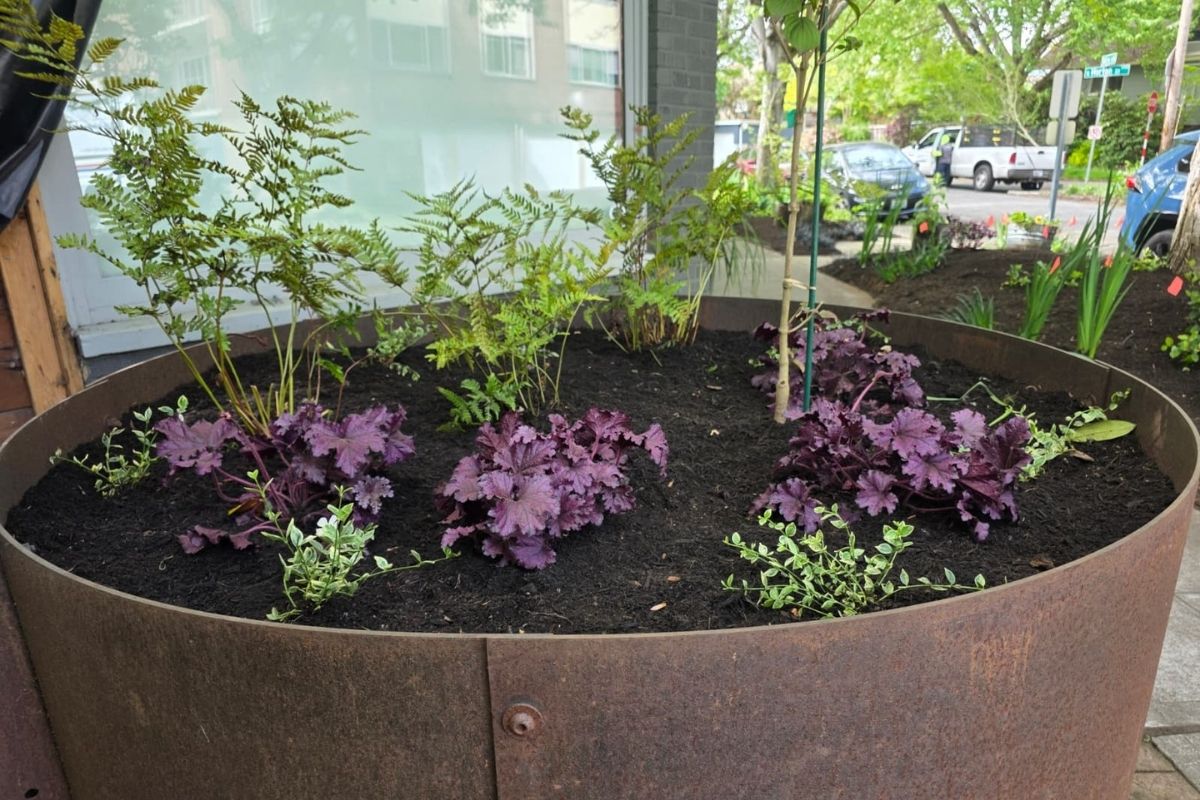
Spring is the ideal season for planting. Soil is moist, temperatures are mild, and roots establish well before summer heat arrives. In Seattle, that window runs roughly from mid-March through May.
Divide any perennial ground cover that has become crowded or patchy. Low-growing groundcover like creeping thyme, wild ginger, and foamflower all respond well to division in early spring. As a result, you get more coverage from the same plants — and the divided sections fill in quickly through the season.
Add fresh mulch to open beds after cleanup and planting. A two-to-three-inch layer retains moisture, moderates soil temperature, and suppresses weeds through the dry months ahead. In the PNW, we prefer arborist wood chips or compost-based mulch over bark — both break down and improve soil structure over time.
Also, take note of any gaps where plants didn't survive winter. Spring is the right moment to fill those spots — while conditions favor establishment and before the summer drought begins.
5. Evaluate What the Garden Needs Long-Term
The fifth task is less about doing and more about seeing. Walk the garden slowly. Notice what thrived and what struggled. Look at the areas that received too much shade, too little water, or too much foot traffic through winter.
Spring reveals a garden's honest condition. In Seattle, that often means noticing where drainage is working and where it isn't — puddles that linger for days are worth addressing before they become a recurring problem.
Consider whether the garden's structure still serves you. A section that never gets used, a hedge that outgrew its space, or a slope that erodes each winter — these are worth planning for, even if the work happens later in the season. Over time, small adjustments made with intention add up to a garden that genuinely works.
A spring walk with fresh eyes is one of the most useful things you can do for the landscape.
Spring is a generous season in the Pacific Northwest. The garden is already moving — roots are active, new shoots are emerging, and the soil is alive with organisms doing quiet, essential work. A thoughtful checklist doesn't push the season. It meets it where it is, and helps the garden build on what it already knows how to do.