
Most homeowners will try to repair a struggling lawn first. And that’s usually the right decision. Many techniques can help, such as aeration, overseeding, compost, and improved mowing.
These can dramatically improve many Seattle lawns over time. But sometimes, repair becomes an endless cycle: Seed it again. Treat moss again. Fix the mud again. Fertilize again. Repeat next year.
At some point, it’s fair to ask: “Is this lawn actually viable here?” Let’s talk about when repair makes sense, and when replacement or redesign may be smarter.
When Lawn Repair Makes Sense
Repair usually makes sense when:
✔ The lawn gets at least 4–6 hours of usable light
✔ Compaction is present but correctable
✔ Drainage is manageable
✔ Lawn coverage is still 50% or more
✔ Traffic levels are moderate
✔ Irrigation is available
In these situations, a structured 1–2 year soil restoration and overseeding plan can work very well. Many Seattle lawns fall into this category.
Signs You’re Stuck in a Lawn Repair Cycle
Repair may not be enough when:
- More than 50% of the lawn is moss
- Bare soil dominates in winter
- The area is heavily shaded all day
- Roots from large trees dominate the soil
- The lawn is primarily a footpath
- It sits in a natural drainage swale
Take into account that some of these aren’t maintenance failures but site limitations.
The Shade Reality in Seattle
Grass is a full-sun plant. While some shade-tolerant blends help, deep shade will, eventually, prevent long-term success.
Seattle has a mature tree canopy, smaller urban lots, and limited winter sunlight. If grass receives less than 3–4 hours of filtered light, density will always be difficult to maintain.
No fertilizer fixes shade.
High-Traffic Areas: When Lawn Isn’t the Right Surface
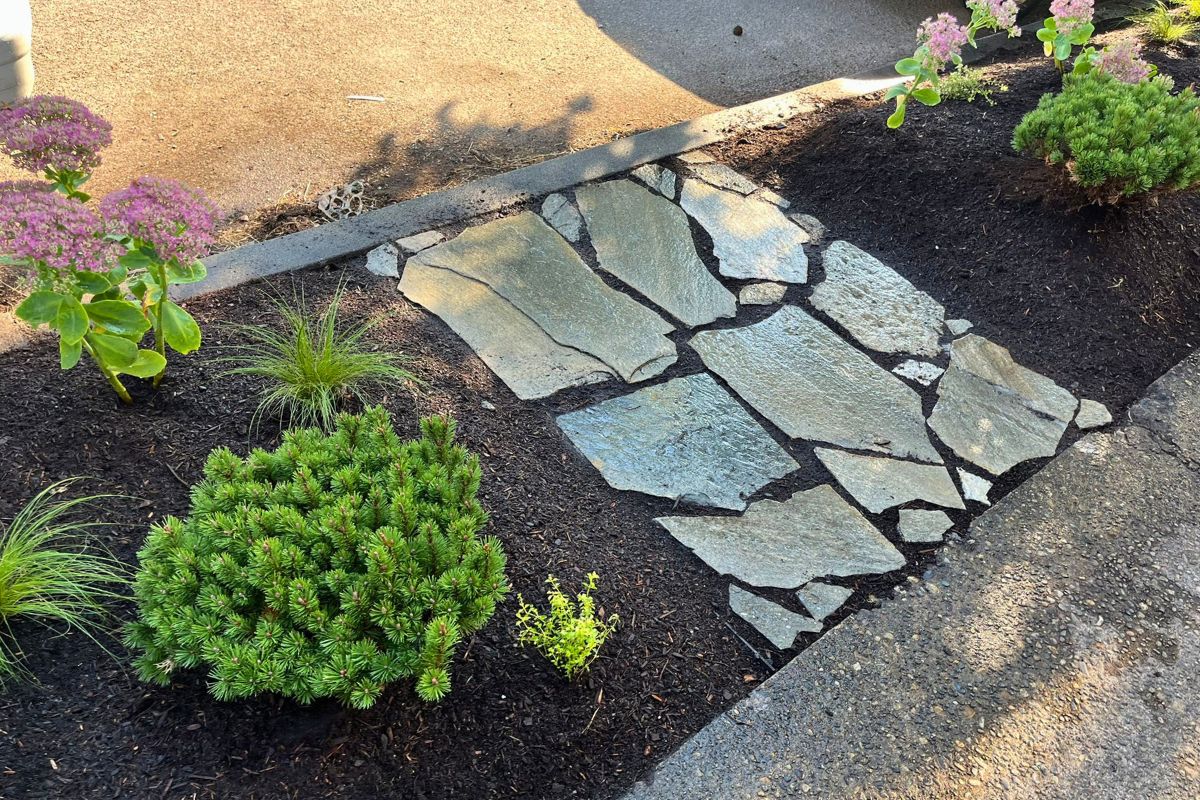
Some areas of a yard simply aren’t suited for lawn. Especially when they carry out daily movement. If people naturally walk across them, if they serve as a dog run, or if they connect the house to the gate, those spaces are already functioning as pathways. Designing them as such often leads to better long-term performance and a more intentional landscape.
In these cases, it makes more sense to install:
- Permeable pavers
- Gravel paths
- Stepping stone walkways
- Defined circulation routes
Building an appropriate hardscape could cost less than repeated lawn repair.
Drainage Issues That Signal Lawn Replacement
The signals are clear in water’s behavior. When we make a diagnosis, we observe if water pools in one place, flows naturally across the lawn, or collects at low points.
You may be trying to grow turf in a natural drainage zone. A rain garden, planting bed, or designed water solution may be far more sustainable.
Cost Comparison: Repair vs Lawn Renovation
Over 3–5 years, repeated repair can include annual aeration, overseeding, moss treatments, fertilization programs, irrigation upgrades, and mud remediation.
At some point, the cumulative cost equals or exceeds the cost of lawn renovation, including landscape redesign, native planting installation, and pathways.
It’s worth evaluating that honestly.
What Lawn Replacement Actually Means
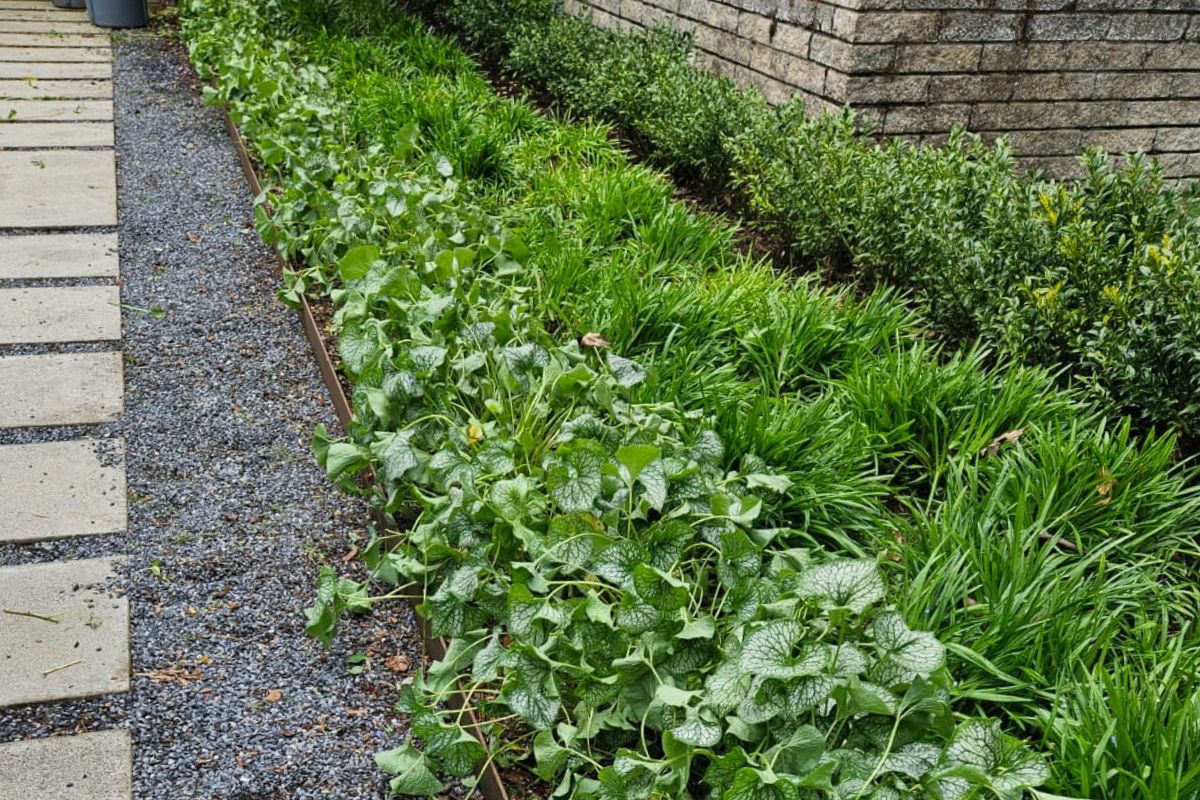
Replacement doesn’t always mean artificial turf. Often it means converting part of the lawn to native planting, reducing lawn footprint, creating woodland-style gardens, installing pathways in high-traffic zones, and adding permeable surfaces.
In Seattle, this often results in:
✔ Lower maintenance
✔ Better drainage
✔ Improved biodiversity
✔ Fewer mud issues
✔ Stronger long-term performance
Questions to Ask Before Replacing Your Lawn
- Do I actually use this lawn?
- Does it get enough light?
- Am I repairing the same areas every year?
- Is mud a seasonal guarantee?
- Would a pathway improve how we move through the space?
- Would planting be more appropriate here?
A Sustainable Approach to Lawn Decisions in Seattle
We don’t default to replacement. We evaluate soil health, compaction levels, light exposure, drainage patterns, traffic flow, and the homeowners’ goals. If repair makes sense, we pursue restoration. If redesign makes more sense, we honestly recommend that.
Final Thoughts
Sustainable landscapes work with the site, not against it. So, if your lawn feels like a seasonal battle, it may be worth evaluating whether restoration or redesign makes more sense.
Thoughtful landscapes work with light, water, and movement. Over time, that alignment makes all the difference.
If you want us to evaluate your lawn options, send us a message.