
Battery-Powered vs. Gas-Powered Landscape Equipment: Pros and Cons
As landscapers committed to sustainability, we’ve entered a debate: battery-powered vs. gas-powered equipment. Change is happening. From blowers and mowers to string trimmers, the tools we’re now adopting are quietly reshaping the industry—and transforming neighborhoods.
At Seattle Sustainable Landscapes (SSL), we’ve worked with both gas and battery-powered equipment, in real jobs and controlled trials. Each option has strengths—and its quirks—but our dedication to sustainability, client satisfaction, and crew well-being has led us toward battery-powered solutions.
So if you’re a homeowner curious about that quieter hum coming from your yard—or simply done with the gas-blower orchestra—here’s a clear breakdown of what sets these tools apart.
Battery-Powered Equipment: The Pros
Quiet Operation
Most battery-powered tools operate around 60–70 dB, compared to 90–100 dB for gas counterparts. That means no more early-morning noise battles, happier neighbors, and a more peaceful environment overall.
Zero On-Site Emission
Electric equipment produces no exhaust at point of use. That means cleaner air for you and your neighbors, no smog, no fumes, no unpleasant smells.
Lower Vibration and Crew Fatigue
Battery tools tend to vibrate less, reducing wear and tear on hands and joints. For professional crews using this equipment all day, that’s a big deal.
Simpler Maintenance
No oil changes, spark plugs, or carburetor issues. Battery tools are simpler to maintain, and there’s no fuel mixing or spilling.
Aligns with Client & City Values
More Seattle-area clients are asking for electric service—and cities like Seattle are phasing out gas blowers entirely by 2027. Going electric now positions crews to be future-compliant.
Seattle, landscaping noise is one of the top complaints to city hotlines and HOAs.
Battery-Powered Equipment: The Cons
Limited Runtime
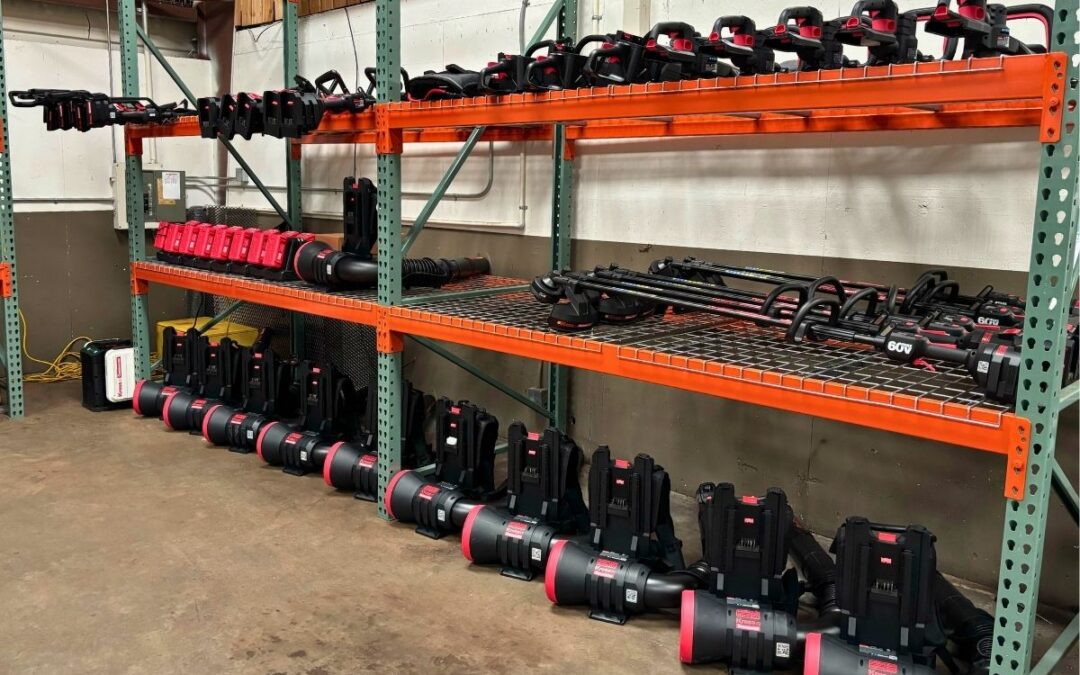
Most professional-grade battery tools last 30–60 minutes on a charge. That means managing multiple batteries or planning work around recharges.
Upfront Equipment Costs
Battery tools (and especially commercial battery systems) are more expensive up front, though they may pay off over time with reduced fuel and maintenance costs.
Power Trade-Offs
While battery tools are catching up fast, gas still has the edge for heavy-duty, long-duration jobs—especially for leaf blowing in wet conditions or mowing large areas.
Charging Infrastructure
To go fully electric, companies need a strategy for charging, storing, and rotating batteries efficiently. It’s not just a tool issue—it’s a systems issue.
Gas-Powered Equipment: The Pros
High Power Output
Gas tools deliver raw, consistent power for demanding tasks—especially over long shifts.
Long Runtime
As long as you have fuel, you can keep working. That reliability is part of what’s made gas the industry standard.
Lower Initial Cost
Gas tools are usually cheaper upfront, making them more accessible for small companies or startups.
Gas-Powered Equipment: The Cons
❌ High Noise Levels
At 90+ decibels, gas tools are disruptive and often at odds with residential expectations.
❌ Emissions
Gas engines—especially two-stroke models—emit harmful pollutants and greenhouse gases.
❌ Maintenance Heavy
Oil changes, spark plugs, and carburetors require more attention and downtime.
❌ Fuel Storage & Spillage
Handling gasoline comes with environmental and safety risks. Spills happen. Fumes linger.
SSL’s Take: Why We’re Going Battery-Powered
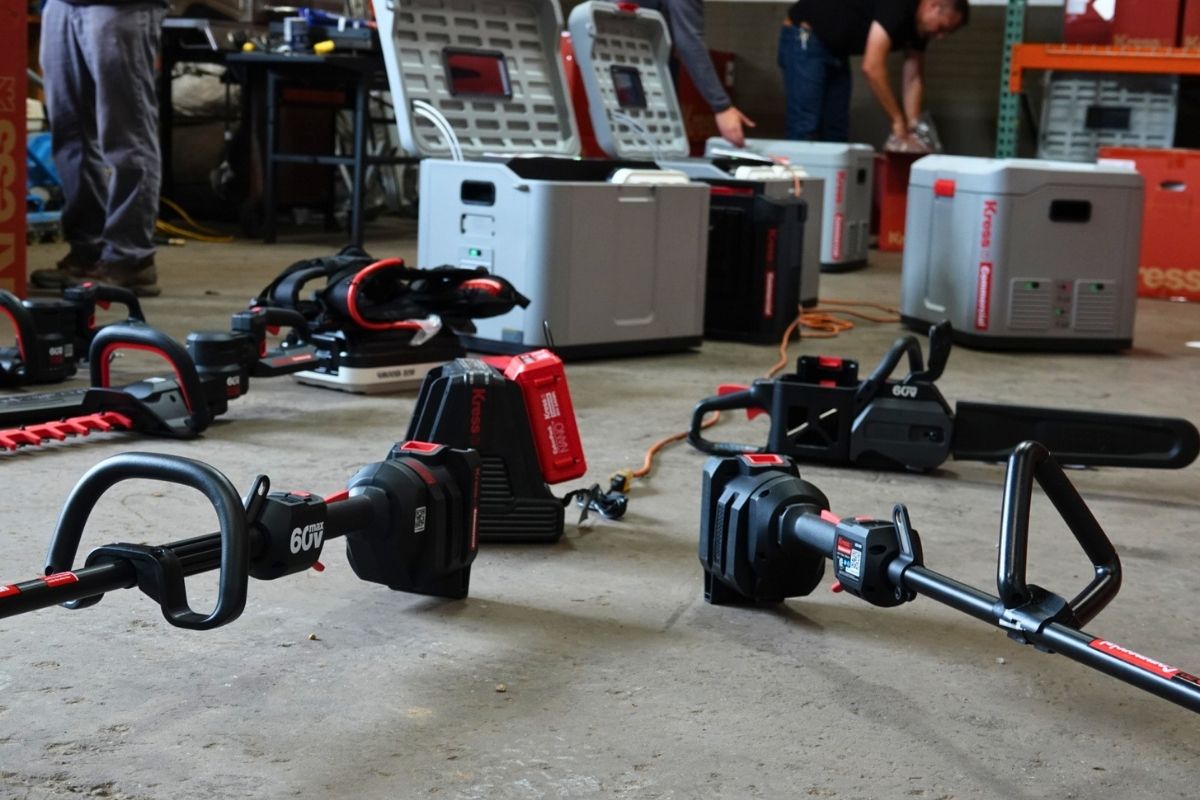
At SSL, we’ve tested equipment from Stihl, Milwaukee, and now Kress, one of the most promising commercial-grade platforms available. While earlier trials revealed issues with power and battery management, we’re seeing real progress—and real promise.
We believe battery-powered landscaping is the future, even if it’s not flawless today. The benefits for the environment, our crews, and our clients far outweigh the current trade-offs.
Final Thoughts
Both gas and battery-powered landscape equipment have a role to play in today’s industry—but that balance is shifting rapidly. As cities regulate emissions and clients demand quieter, cleaner service, battery tools are becoming not just viable—but preferable.
Ready for a quieter, cleaner, forward-thinking landscape experience? Let’s talk about how SSL is building a better yard care future—one battery at a time.
Contact your local landscaper professional committed to sustainability.
Go to our Blog Page
Contact Us for more information!