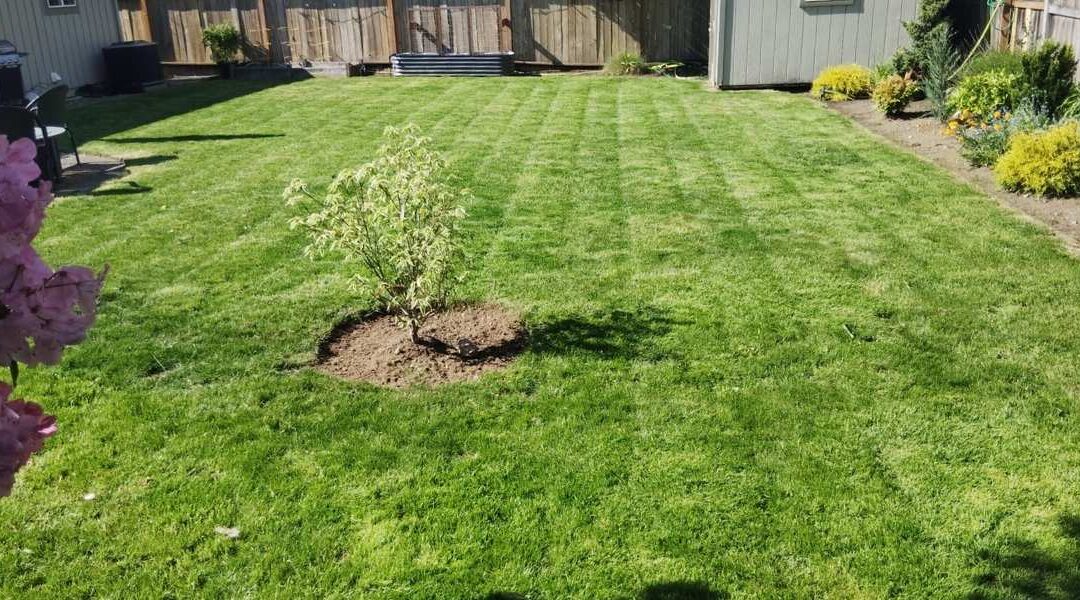
Few things frustrate homeowners more than a lawn that feels thin, patchy, muddy in winter, and worn down by late summer. In Seattle, this pattern is extremely common.
And there is something we say often, gently and honestly. Sometimes the issue is not your maintenance. Sometimes, the landscape was never truly suited for a lawn in the first place.
Let’s look at both possibilities: practical lawn repair strategies and the deeper design realities that shape long-term success.
Why Lawns Struggle in Seattle's Climate
Seattle presents several natural challenges for traditional turf. Mature tree canopy limits available sunlight. Long wet seasons saturate soils. Many neighborhoods sit on compacted glacial soils that drain slowly. Urban lots are often smaller, which concentrates shade and foot traffic into tight areas.
Grass needs consistent sunlight, oxygen in the root zone, adequate drainage, airflow, and periodic rest from traffic. Many Seattle yards simply do not provide that full combination.
Why Patchy Lawns Turn Into Winter Mud
When turf begins to thin, soil becomes exposed. Once exposed, winter rain saturates the surface and compaction increases. Shallow roots fail to hold soil structure in place, and mud develops.
Over time, people naturally avoid the wettest spots. Foot traffic concentrates into narrow paths, compaction worsens, and turf declines further. What started as thinning grass becomes a repeating seasonal cycle.
When Lawn Repair Can Be Successful
If a space receives at least four to six hours of filtered sunlight, has manageable tree competition, and drains reasonably well, restoration can be successful.
A structured plan often includes
- core aeration
- compost topdressing
- overseeding with shade-tolerant blends
- irrigation adjustments
- proper mowing height
- redirecting concentrated traffic
Over one to three growing seasons, these steps can significantly improve density and resilience.
In many Seattle yards, this approach works very well.
When The Problem is Design, Not Maintenance
However, if a yard is shaded most of the day, surrounded by large trees, heavily trafficked in narrow zones, or muddy every winter despite repeated effort, the issue may not be maintenance at all. It may be a design mismatch.
Continuing to repair turf in a space that does not support it often leads to wasted time, repeated expense, and growing frustration.
When Lawn Is Not the Best Use of Space
In neighborhoods with high canopy coverage and smaller lots, lawns are often installed simply because that is what people expect in a yard.
But sometimes a different solution fits the space better.
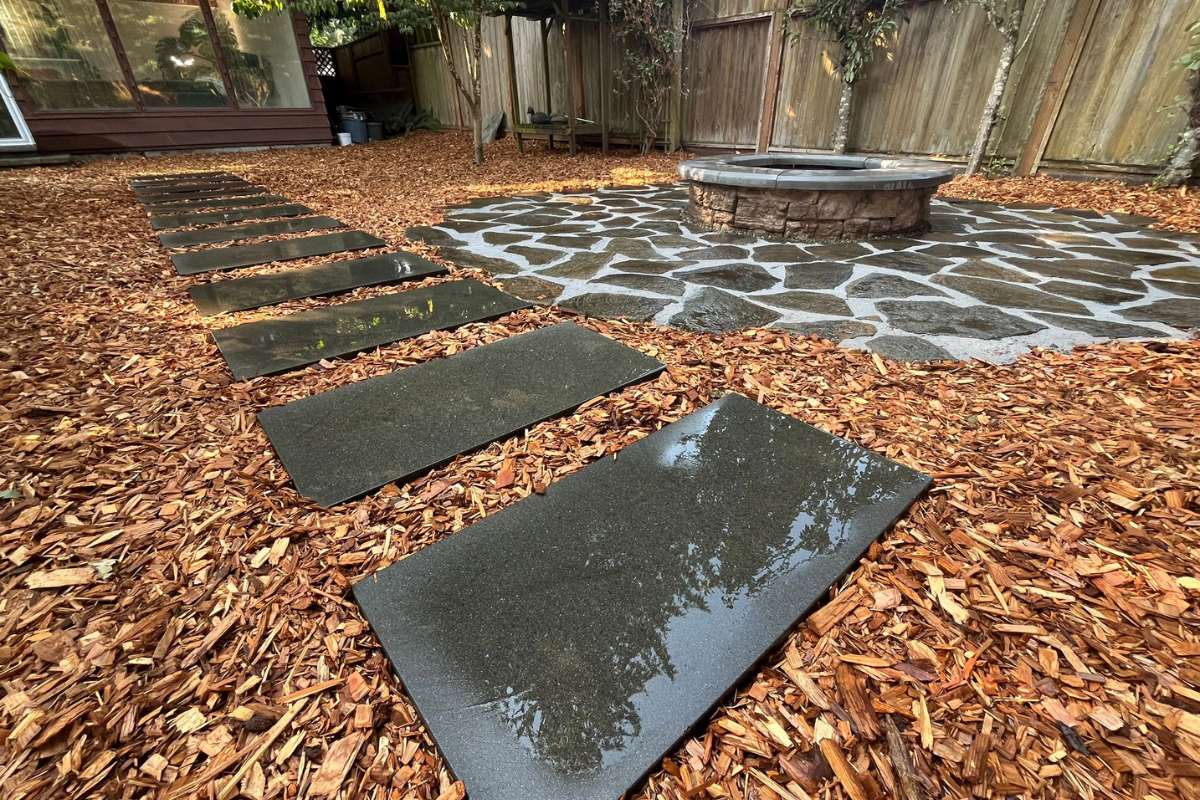
- A defined pathway where people naturally walk can improve function.
- Native groundcovers can thrive in shade.
Mulched planting beds, pollinator gardens, woodland-style landscapes, and permeable surfaces can stabilize soil and reduce seasonal mud.
Rather than forcing turf to perform in unsuitable conditions, the landscape can evolve to reflect how the space is actually used.
The Pathway Solution
One of the most common situations we see is a muddy desire path cutting across a lawn. This happens where movement patterns are clear and repeated. Reseeding these areas year after year rarely solves the problem.
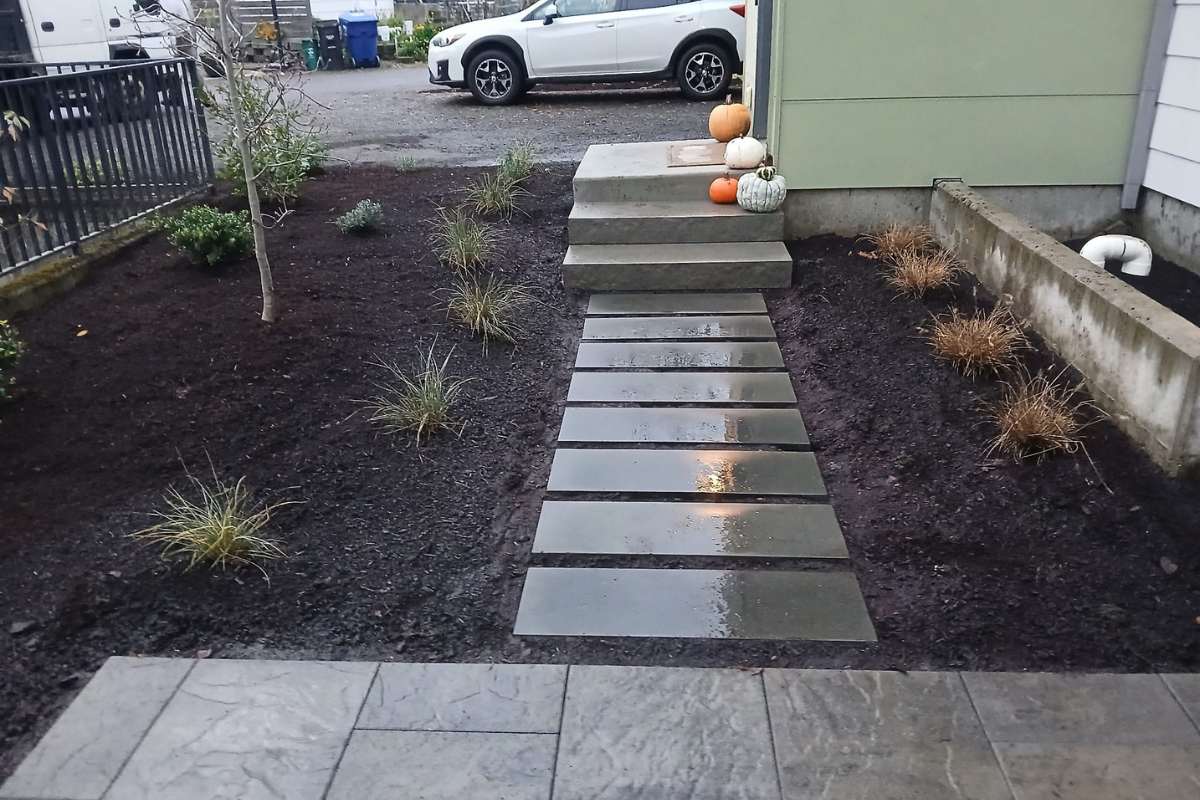
Installing a defined pathway, permeable pavers, gravel with proper base preparation, or stepping stones framed by planting can transform both usability and appearance. Compaction decreases, mud disappears, adjacent turf stays healthier, and the space feels intentional.
In many cases, this solution costs less long-term compared to ongoing repair.
Native Planting as a Lawn Alternative
In shaded Seattle landscapes, native and shade-adapted plants often outperform turf dramatically. Sword fern, salal, Oregon grape, woodland sedges, and other regional groundcovers thrive beneath the tree canopy.
These plants stabilize soil, improve infiltration, reduce mud, and require less seasonal intervention. They also support local biodiversity and align naturally with the Pacific Northwest ecology.
The Long-Term Cost of Fighting the Site
Repeatedly repairing a lawn that does not match its conditions often leads to annual overseeding, frequent aeration, ongoing mud management, moss treatments, and mounting frustration.
Over several years, those accumulated costs can exceed the investment required for a thoughtful design transition that better fits the site.
How to Decide What Makes Sense For Your Yard
When evaluating a struggling lawn, it helps to ask a few grounded questions.
- How much direct or filtered sunlight does this area truly receive?
- Is the mud caused primarily by traffic or drainage?
- Are you willing to irrigate consistently during the summer?
- Do you actually use this lawn for recreation, or is it mainly visual?
- Would a defined pathway improve how you move through the space?
Sometimes the most sustainable decision is not better lawn care. It is a better landscape alignment.
A Sustainable Approach to Lawn Decisions
At Seattle Sustainable Landscapes, we do not automatically recommend lawn repair or lawn replacement. We begin by evaluating site conditions, such as traffic flow, shade levels, soil structure, drainage patterns, and client goals.
In some cases, restoration is the right path. In others, redesign creates a healthier and more functional outcome. The most sustainable landscape is the one that works with light, water, and movement over time.
Final Thoughts
If your lawn feels patchy and muddy every year, if shade dominates your lot, or if certain areas never seem to recover, the solution may not be stronger fertilizer or more seed.
It may be a defined pathway, native planting, a woodland garden, or a thoughtful reduction in lawn footprint. In Seattle, embracing natural conditions often produces better long-term results than fighting them.
Contact us for a free consultation.
Sometimes the healthiest lawn decision is choosing a different groundcover entirely.