

If you live in Seattle, you have probably said this at some point: “I can’t get rid of the moss.”
You rake it out, treat it, and apply moss killer.
And a few months later, it returns.
This happens because moss itself is rarely the real problem. In most Pacific Northwest lawns, moss appears when the conditions for grass are weak. Moss does not aggressively invade healthy turf. Instead, it quietly fills the spaces where grass struggles to grow.
Moss grows in Seattle lawns when turf conditions are weak. Common causes include compacted soil, excessive moisture, shade, and thin grass coverage. Improving soil health, aerating the lawn, and increasing turf density can reduce moss over time.
Understanding why moss grows is the first step to reducing it long-term.
Why Moss Thrives in Seattle
Seattle provides ideal environmental conditions for moss. Cool temperatures, long wet seasons, and limited winter sunlight create a landscape where moss can easily establish itself.
Many residential yards also include mature trees, shaded areas, and compacted soils left behind by glacial geology. These conditions reduce turf vigor and create open space in the lawn canopy. Moss naturally colonizes those spaces because it thrives in low light, consistent moisture, and compacted soils where grass roots struggle to grow.
For many homeowners, the issue is not that moss is unusually aggressive. It is that lawns are growing in conditions that favor moss instead of turf.
The Real Causes of Moss in Lawns
Moss usually appears when one or more environmental stresses weaken the lawn.
One of the most common causes is soil compaction. Compacted soil limits oxygen flow, restricts root development, and prevents proper drainage. Grass struggles in compacted soil because its roots cannot penetrate deeply. Moss, which does not rely on deep roots, quickly fills those thin areas of turf.
Thin or weakened turf also allows moss to spread. When lawns lose density due to drought stress, low fertility, heavy foot traffic, or poor mowing practices, bare soil becomes exposed. Moss colonizes that open space quickly because it faces little competition from healthy grass.
Excess moisture is another major factor in the Pacific Northwest. Seattle’s long rainy seasons keep soils damp for extended periods. When drainage is poor or soil structure is weak, moisture remains near the surface, creating an ideal moss habitat.
Shade also plays a significant role. Grass requires sunlight to maintain density. In heavily shaded areas beneath mature trees or between buildings, turf growth slows dramatically. Moss, however, tolerates low light conditions much more easily.
Finally, poor soil health can contribute to moss problems. Soils with low organic matter and weak biological activity struggle to support vigorous grass growth. When the soil ecosystem declines, turf becomes less competitive and moss gradually expands.
Why Moss Killer Rarely Solves the Problem
Many homeowners try to control moss with chemical treatments or moss-killing products. These products can temporarily eliminate visible moss, turning it black and making it easier to rake out of the lawn.
However, these treatments do not address the conditions that allowed moss to grow in the first place. They do not relieve soil compaction, improve drainage, strengthen turf density, or increase organic matter in the soil.
Because the underlying conditions remain unchanged, moss often returns within a single growing season.
What Actually Reduces Moss Long Term
Long-term moss control focuses on strengthening the lawn rather than attacking the moss itself.
Aeration is one of the most effective improvements. By relieving soil compaction, aeration allows oxygen, water, and nutrients to reach the root zone more easily. This encourages deeper root growth and stronger turf development.
Adding compost to the lawn also improves soil structure over time. Compost topdressing increases organic matter, supports soil biology, and helps soils drain more effectively. Healthier soil allows grass to compete more successfully against moss.
Overseeding is another important step. Increasing turf density helps grass occupy the space where moss would otherwise establish itself. Dense lawns naturally suppress moss growth because fewer bare areas are available for colonization.
Balanced fertilization supports stronger turf growth throughout the season. When lawns receive appropriate nutrients, grass becomes more vigorous and better able to compete.
Mowing practices also matter. Maintaining turf at a slightly taller height helps shade the soil surface and improves turf resilience. Taller grass blades allow the lawn to capture more sunlight and maintain stronger root systems.
In some situations, drainage improvements may also be necessary. Areas that remain saturated for long periods may require grading adjustments or drainage solutions to improve soil conditions.
When Moss May Always Be Present
In some Seattle landscapes, moss is difficult to eliminate completely. Deep shade beneath mature trees often prevents turf from receiving enough sunlight to thrive.
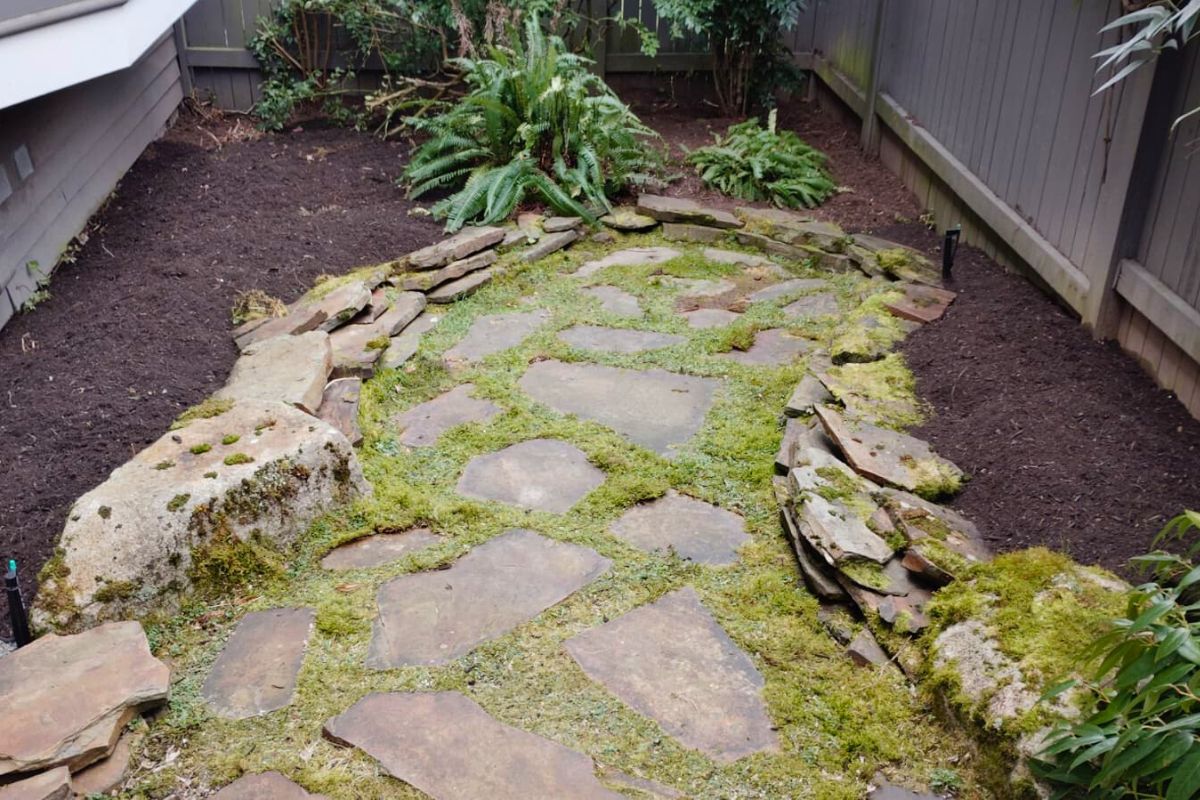
In these situations, it may be more practical to adapt the landscape design rather than continually struggle to maintain grass. Shade-tolerant groundcovers, woodland plantings, or even intentional moss gardens can provide attractive alternatives that work better with the site conditions.
Sometimes the most sustainable solution is accepting what the landscape naturally supports.

The Typical Timeline for Moss Reduction
Improving lawn conditions takes time. When soil health and turf density are strengthened, moss usually declines gradually rather than disappearing immediately.
During the first year, homeowners often see modest improvements as soil structure begins to recover and turf density slowly increases. By the second year, moss pressure typically decreases more noticeably as the lawn becomes thicker and more competitive. By the third year, moss is often limited to the most heavily shaded areas of the property.
Consistency is key to long-term improvement.
The Honest Truth About Moss in Seattle
In the Pacific Northwest, eliminating moss forever is rarely realistic. The climate naturally supports it.
However, controlling moss is absolutely possible. Strong lawns naturally resist moss invasion because dense turf leaves little room for moss to establish itself.
Rather than focusing only on moss removal, the most effective approach is to strengthen the lawn ecosystem.
Final Thoughts
If moss keeps returning to your lawn, it may be a sign that the soil and turf conditions need attention. Improving drainage, soil health, and lawn density can gradually shift the balance back toward healthy grass.
In Seattle Landscapes, moss often acts as a messenger. When you improve soil conditions and strengthen turf density, moss gradually loses the advantage.
If you would like help evaluating your landscape conditions, the team at Seattle Sustainable Landscapes can assess your property and recommend a long-term plan for healthier turf.
Submit the form on our website for a consultation.