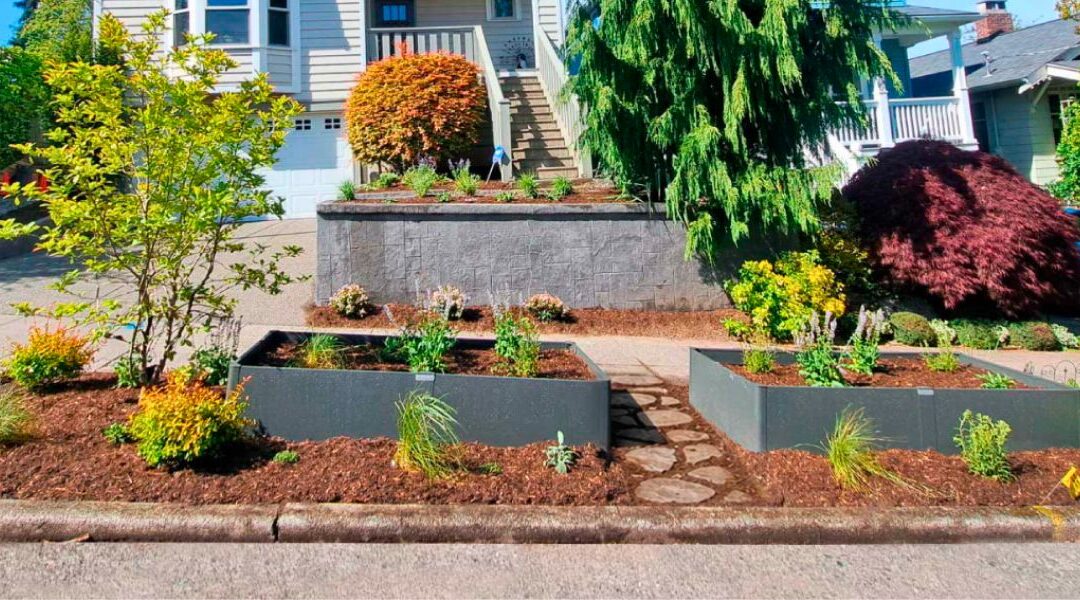
What plants work best in a parking strip?
The strip of ground between the sidewalk and the street is easy to walk past without a second thought. In Seattle, though, we often find it's one of the most rewarding places to plant. Narrow and sun-baked as they are, parking strips reward thoughtful design with months of bloom, a steady stream of pollinators, and a kind of curb presence that the whole neighborhood notices over time.
At Seattle Sustainable Landscapes, we've worked with these strips long enough to know what holds up. The conditions are real: full sun, compacted soil, occasional foot traffic, and (in most cases) little to no irrigation. The plants that do well here are the ones that have learned to work with those conditions.
Plants That Belong at the Curb
Thyme
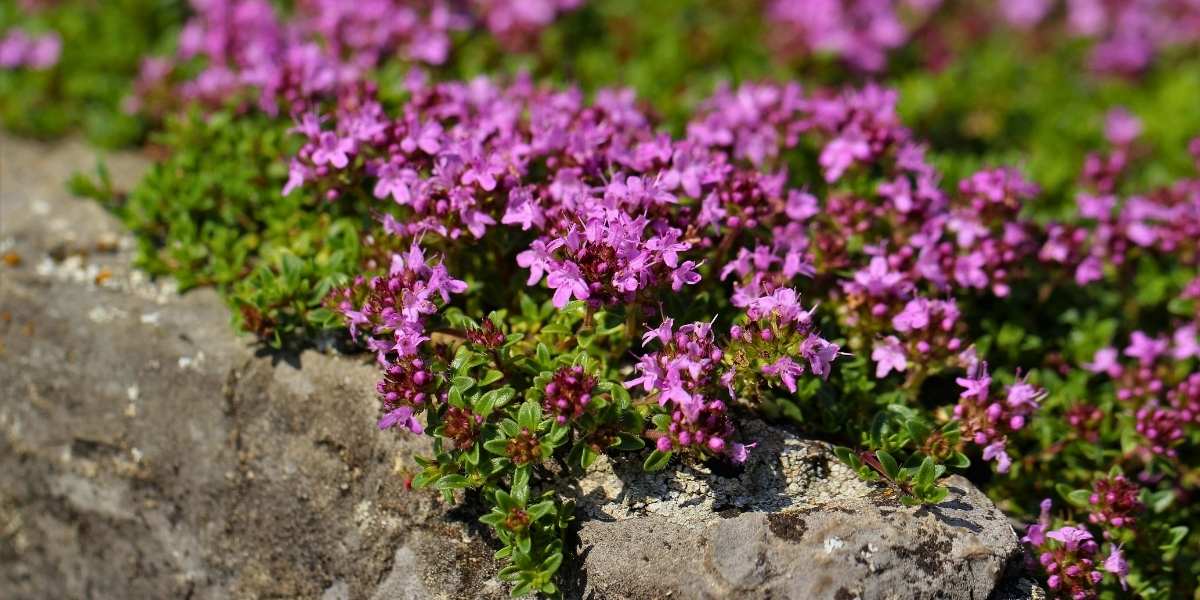
Thyme is one of the first plants we reach for in parking strip landscaping. Low-growing and dense, it forms a mat that handles the heat and dryness of curbside life with ease. Through summer, it blooms in soft purples and pinks that draw bees in steadily — and it releases its fragrance whenever someone walks close. For Seattle gardens where space is tight and the sun is strong, it fits naturally.
Why we love it: It's fragrant, bee-friendly, and a great lawn alternative for tight spaces.
Sedum
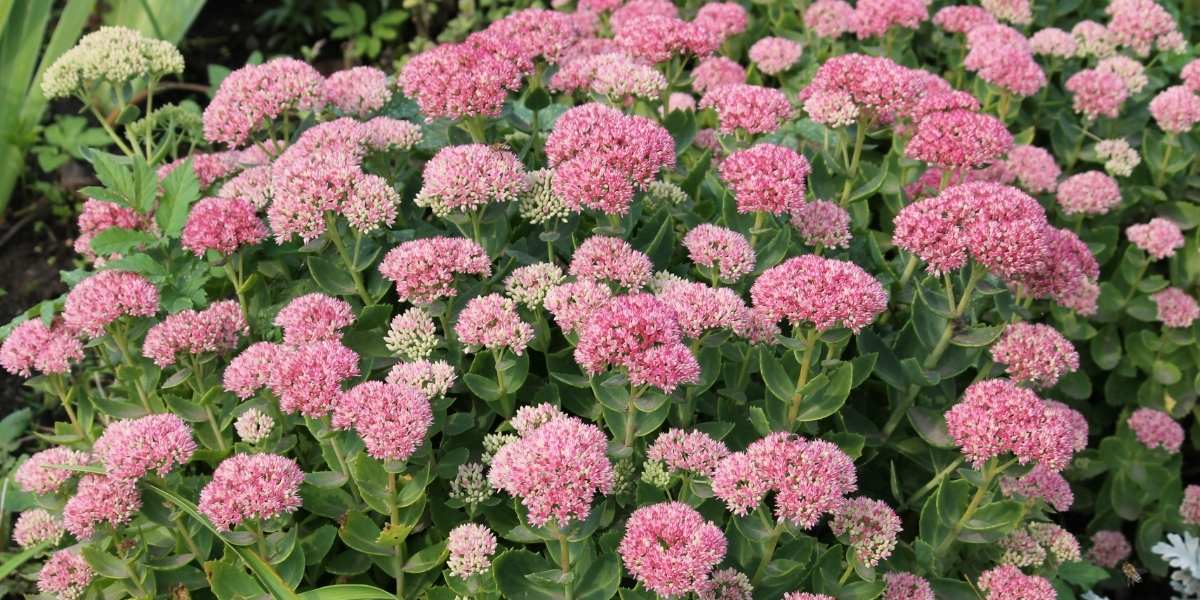
Sedum adds bold texture to sunny strips. These drought-tolerant succulents ask for almost nothing once established, and their late-summer blooms in yellow, pink, and copper attract butterflies at exactly the moment when many other plants have finished.
Why we love it: Their blooms attract bees and butterflies, and they add bold texture to sunny strips.
Lavander
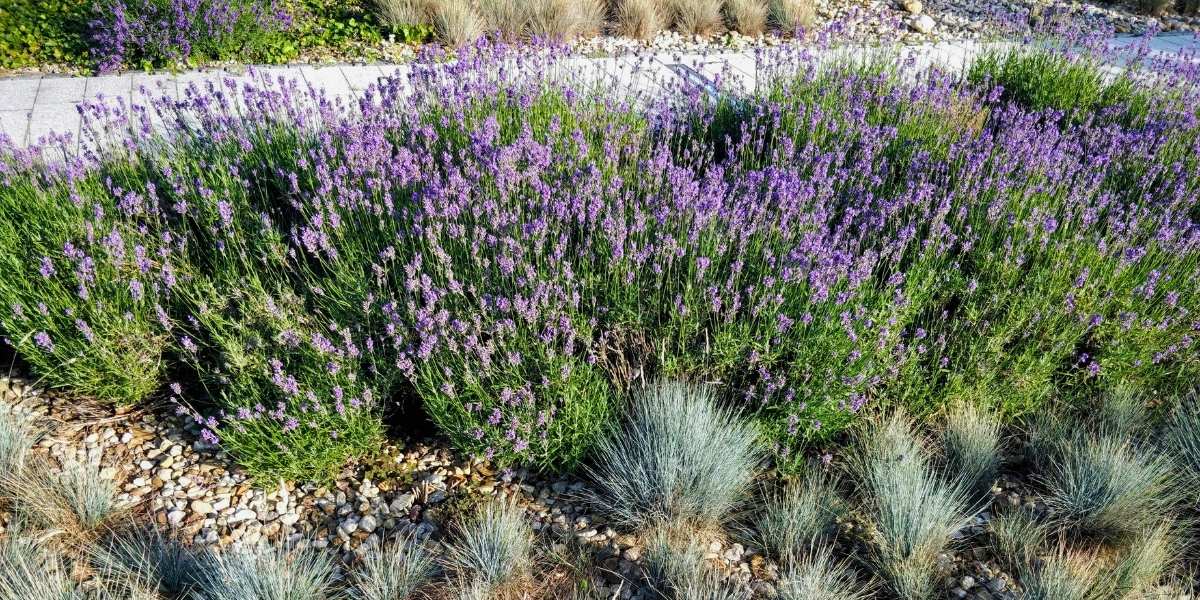
Lavender earns its place at the curb for reasons beyond beauty. Its aromatic foliage is naturally deer-resistant, its purple blooms are a consistent draw for bees, and it handles the heat and dryness of south-facing Seattle strips as well as anything we plant.
Why we love it: It smells incredible, resists deer, and loves the sun and heat of the curbside.
Kinnikinnick
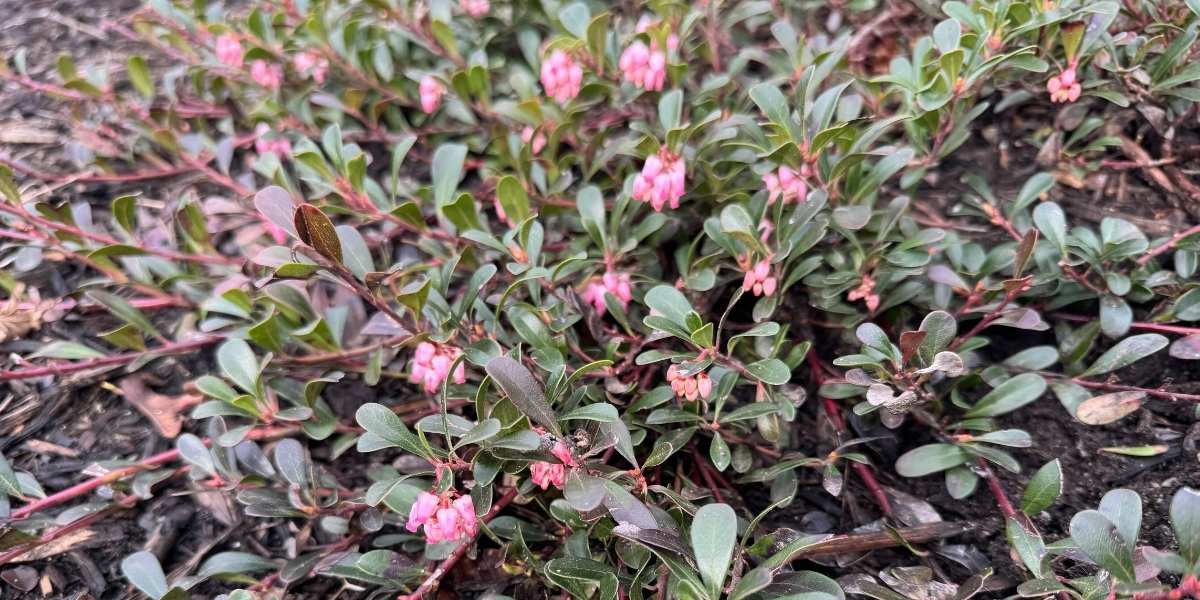
Kinnikinnick (Arctostaphylos uva-ursi) brings something different: that deep-rooted native quality that makes a landscape feel like it belongs here. Its glossy evergreen leaves hold through the seasons, its spring flowers are delicate pink, and by fall it carries red berries that birds return to reliably. We see it thriving in the toughest exposed strips — dry, windy, and hard-packed — where other plants would struggle.
Why we love it: It’s beautiful, tough, and provides shelter and food for pollinators and birds.
Oregon Sunshine
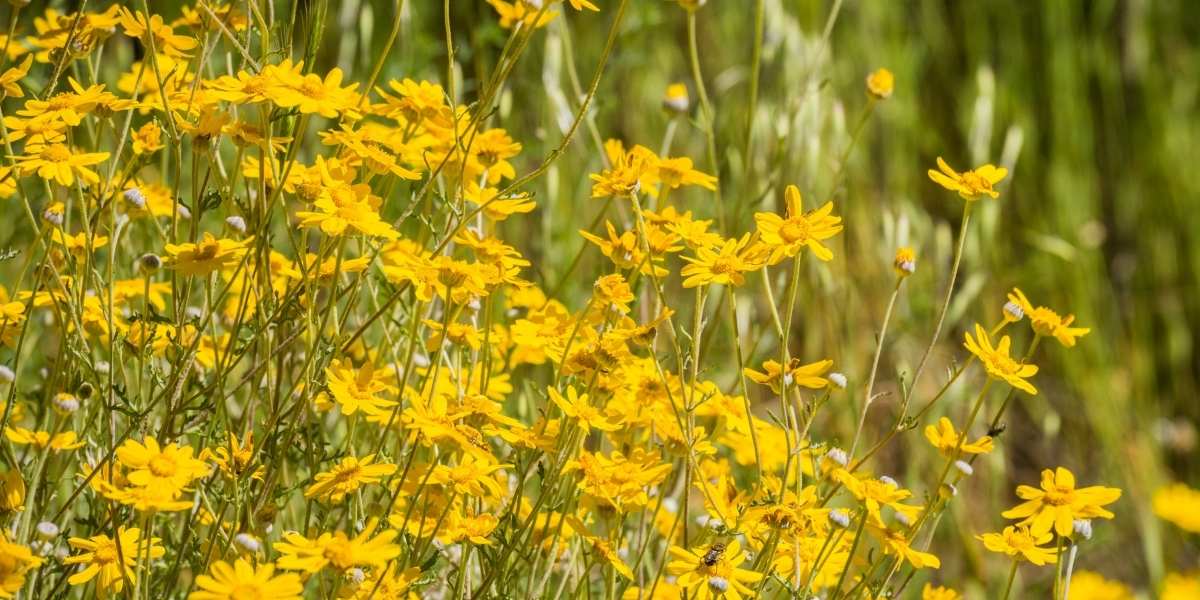
Oregon Sunshine (Eriophyllum lanatum) covers a similar season. It's a native wildflower with silvery foliage and cheerful yellow blooms that perform beautifully in poor soil and full sun.
Why we love it: It’s bright, long-blooming, and thrives in the toughest parking strips.
Coreopsis
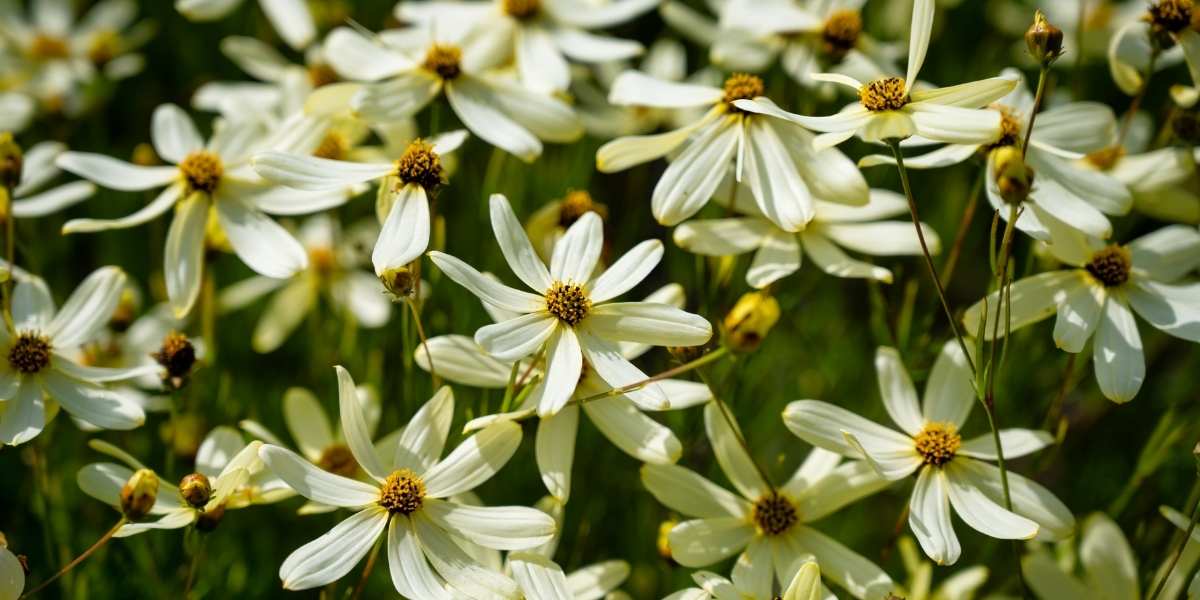
Coreopsis (Coreopsis verticillata) rounds out the palette with weeks of bright yellow flowers and a compact habit that never overwhelms the space.
Why we love it: It provides cheer, pollinator value, and doesn’t ask for much in return.
Carlifornia Lilac
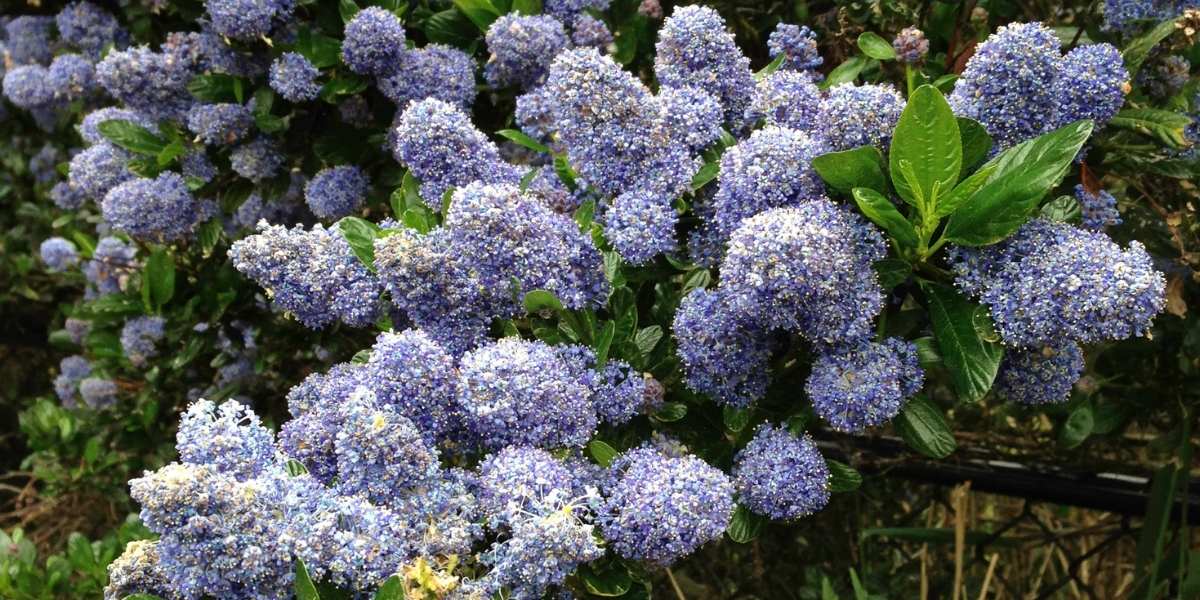
For something with a little more structure, lower-growing varieties of California Lilac (Ceanothus spp.) offer masses of blue spring flowers and year-round evergreen foliage — an excellent choice for parking strip landscaping ideas that call for something more substantial than a ground cover alone.
When the Strip Is Wide Enough for a Tree
In wider planting strips, a well-chosen street tree changes the whole character of the space, providing shade, managing stormwater, and creating urban habitat that extends well beyond the curb. Seattle maintains a list of approved street trees based on strip width and site conditions, and it's worth reviewing those guidelines before planting.
Among our favorites for Seattle parking strips: Serviceberry (Amelanchier alnifolia) for its edible fruit, pollinator-friendly spring blooms, and warm fall color; Vine Maple (Acer circinatum) for its native character and brilliant autumn display; Japanese Tree Lilac (Syringa reticulata) for its fragrant blooms and manageable scale; and Washington Hawthorn (Crataegus phaenopyrum) for its spring flowers, fall berries, and exceptional wildlife value.
Tree selection and placement must follow Seattle Department of Transportation guidelines. We're happy to help navigate that process as part of the design.
Design Tips for Parking Strip Success:
Near intersections, we focus on low-growing plants to maintain clear sightlines — a small design choice that matters for safety. Mulch goes in early to retain moisture and keep weeds from taking hold. Thorny or sprawling plants stay out of pedestrian zones. And wherever possible, we group drought-tolerant species together so maintenance stays light through the dry season.
Summery:
- Select low-growing plants near intersections to maintain visibility.
- Use mulch to retain moisture and reduce weeds.
- Avoid thorny or sprawling plants near pedestrian traffic.
- Group drought-tolerant species to minimize maintenance.
Parking strip landscaping is, in many ways, a form of generosity. The plants live at the edge of the property, but the bloom, the fragrance, and the pollinators belong to everyone who passes.
In Seattle, where front yards face the street, and neighbors walk past every day, that's a kind of connection worth designing for.
Over time, a well-planted strip becomes part of the rhythm of the street, something people notice in April when the thyme blooms and again in October when the serviceberry turns.
If you’d like to explore possibilities for your front yard, tell us your expectations, and we'd be happy to help.