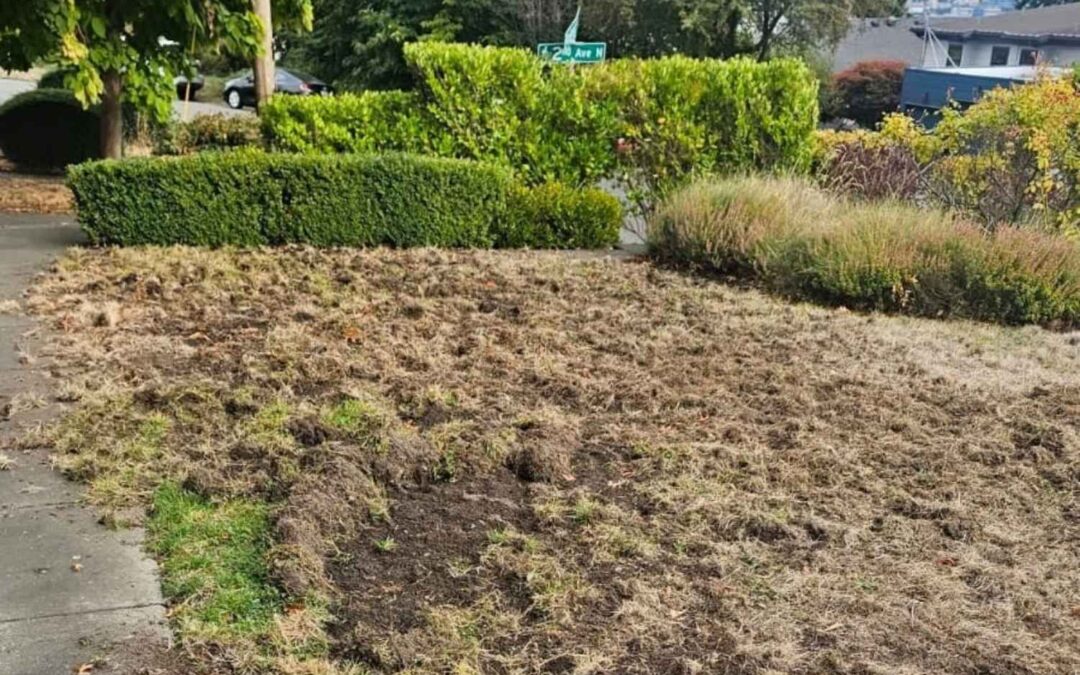
If you find yourself asking, “Why are crows digging up my lawn?”, you are not alone. Crows tearing up grass is a symptom of a hidden ecosystem thriving right beneath your feet. Crows are incredibly intelligent and adaptable birds. When they rip up your lawn, they are not being malicious; they are simply hunting. They know exactly where to find an easy, protein-rich snack, and unfortunately, your yard is their current favorite restaurant.
Just earlier today, I was walking down a residential sidewalk in Seattle, chatting on the phone with our Yard Care Account Manager, when I noticed something frustrating but increasingly familiar. The turf along the sidewalk had been completely shredded. Clumps of dirt and grass were scattered across the concrete, and the underlying soil had been clearly disturbed.
This moment perfectly illustrates a growing issue we have been seeing more and more across the Seattle area.
I snapped a photo and sent it to our Manager. His immediate response was exactly what I expected: “It is nematode season!”
The Target: White Grubs & Beetle Larvae
What exactly are these birds looking for when they destroy your pristine yard? The answer lies in the soil. Crows are hunting for beetle larvae, which are commonly referred to as lawn grubs.
Lawn Grubs
These pests are the immature form of various scarab beetles. Depending on your exact location, a beetle larva found in your yard could become a European chafer beetle, a Japanese beetle, or a crane fly. These grass grubs live entirely in the soil during their larval stage, where their primary source of food is the root system of your turf.
As these beetle grubs feast on the roots, they sever the plant from its water and nutrient supply, causing the grass above to weaken, turn yellow, and eventually die.
If you want to understand more about the life cycle of these pests, you can read more from a highly trusted source: Washington State University Extension on turfgrass insects, which explains how these larvae operate during different seasons.
In Seattle, chafer grubs are particularly notorious for causing widespread damage. These turf grubs provide an excellent, high-fat, high-protein meal for birds. Once a flock of crows figures out that your soil is packed with them, they will return daily to feast.
Crows vs. Raccoons: Identifying the Culprit
We often hear homeowners complain about raccoons digging up lawn areas, and, indeed, raccoons are also avid grub hunters. However, more often than not, crows are the actual culprits behind the daily destruction.
How can you tell the difference between bird damage and mammal damage?
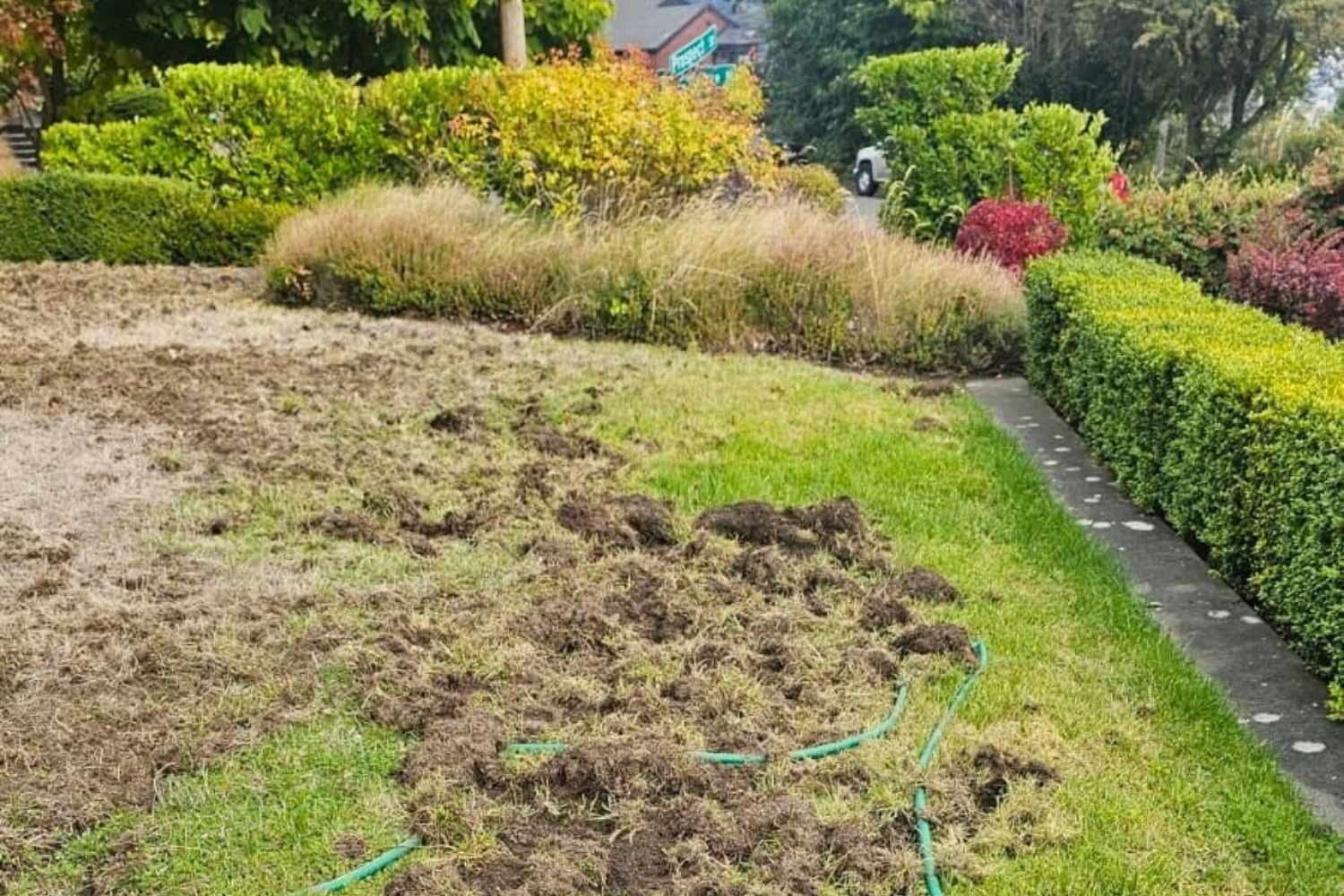
When crows hunt, the damage usually looks like scattered clumps of turf tossed haphazardly aside. They use their strong beaks to pull up small patches of weak grass, creating a messy, shredded appearance. They focus on areas where the lawn is already struggling, such as dry, compacted, or patchy spots where the root systems are easily compromised.
On the other hand, raccoon damage is usually much more methodical and destructive. Raccoons use their agile front paws to physically roll back sections of turf, almost like peeling back a carpet. If your lawn looks like someone took a shovel to it overnight and flipped large chunks of sod upside down, raccoons or skunks are likely to blame. If it looks like a scattered, plucked mess during the daytime, crows are your culprits.
How to Tell If You Have a Lawn Grub Infestation in Seattle
Crows visiting your yard is the most obvious sign of an infestation, but you can also look for secondary indicators to confirm the presence of grubs.
First, check for a spongy texture. Because grubs eat the root system, the turf will lose its anchor to the soil. If you walk on the grass and it feels unusually soft or spongy, that is a major red flag.
Second, look for irregular brown patches that do not improve with watering. You can test this by grabbing a handful of brown grass and pulling upward. If the grass lifts away easily with no resistance, the roots have been entirely consumed.
How to Stop Crows From Digging Up Your Lawn
Fortunately, there are sustainable, long-term solutions that address both the symptom, which is the bird damage, and the root cause, which is the unhealthy lawn and pest infestation.
Some people try using netting, fake owls, or noise repellents to scare crows away. While these might offer a temporary fix, they do not solve the underlying problem. If the food source is still there, the birds will return.
1. Keep Your Lawn Healthy Year-Round
A thick, vigorous lawn is your absolute best defense against pest damage. Crows specifically target weak spots where the grass is already thin, dying, or stressed.
In the Seattle area, our dry summers can severely weaken cool-season grasses, making them highly susceptible to pest damage. You need to irrigate deeply during dry spells to maintain strong roots. Additionally, it is vital that you mow your lawn high and leave the clippings to mulch. Taller grass shades the soil, retains moisture, and promotes a much deeper root system. Finally, aerating and overseeding in the fall will relieve soil compaction, boost root health, and fill in bare patches before the winter season arrives.
2. The Eco-Friendly Solution: Beneficial Nematodes
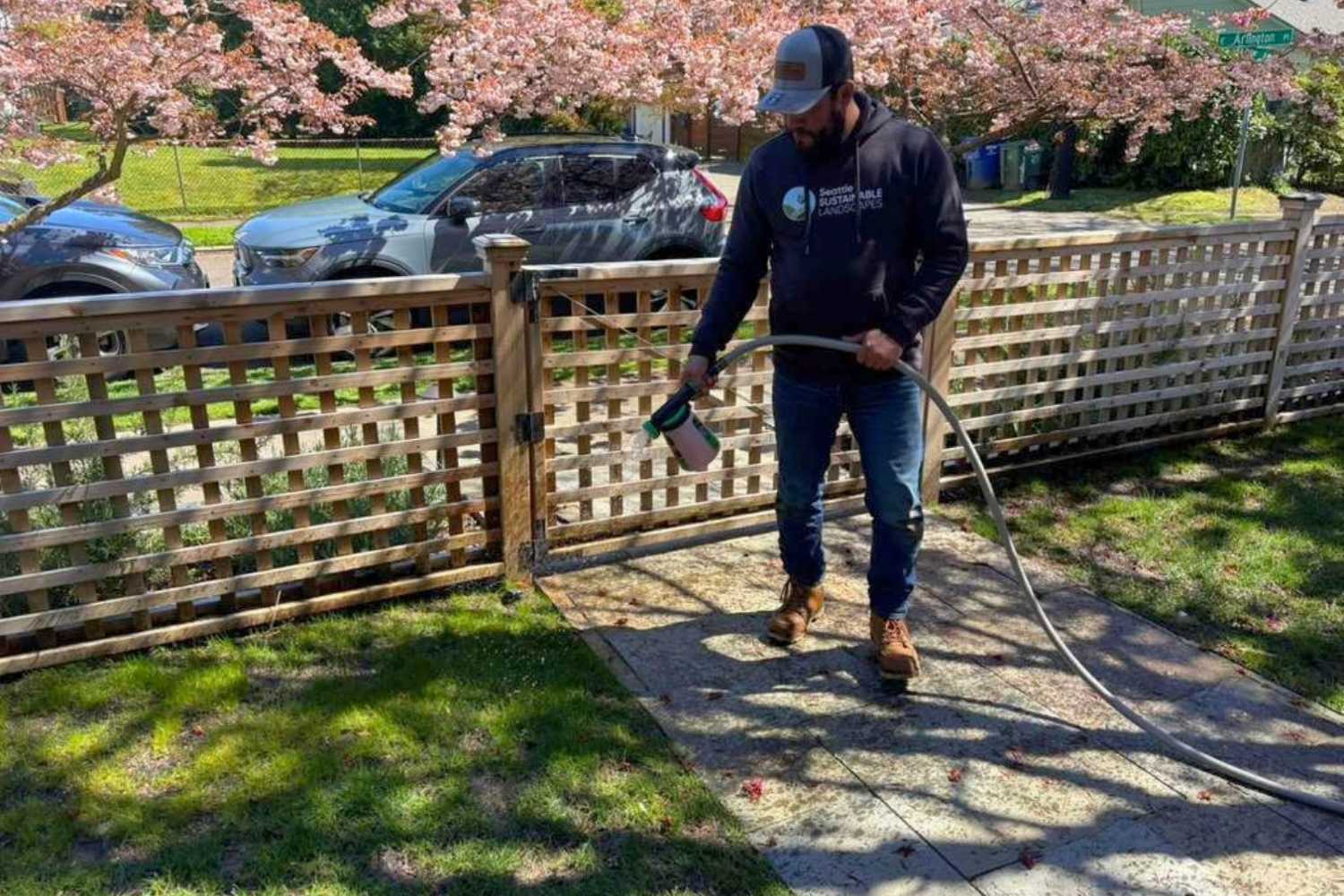
If you want a natural grub treatment that works in harmony with the environment, beneficial nematodes are the answer.
These microscopic organisms are the ultimate pet-safe grub killer. They actively hunt down and destroy grub larvae in the soil without posing any threat to your family, your pets, local wildlife, or the environment.
Using lawn nematodes is a highly effective, chemical-free approach. For a comprehensive guide on exactly how these microscopic heroes work, check out our dedicated article on Nematodes.
How to Repair Lawn Damage After Crows & Grubs
Once you have addressed the underlying grub infestation, it is time to repair the extensive turf damage the crows left behind in their search for food. Follow these steps to restore your lawn to a lush, healthy condition:
- Clear the Debris: Start by vigorously raking the affected areas to remove all the dead grass, thatch, and debris left scattered by the foraging birds.
- Level the Surface: Apply a high-quality layer of compost or topsoil to fill in and level out the holes and divots created by the crows.
- Apply Seed with Care: If you are looking to revitalize a thinning lawn alongside these patches, check out our guide on overseeding for deeper insights. Next, spread a premium, climate-appropriate grass seed over the bare patches, gently raking it into the new topsoil.
- Maintain Moisture: Keep the newly seeded areas consistently moist (watering lightly once or twice a day depending on weather) for the next few weeks until the new grass is fully established and ready for its first mow.
Need Prefessional Help Restoring Your Seattle Lawn?
At Seattle Sustainable Landscapes, we believe the best landscaping solutions come from understanding and working alongside natural systems. We offer sustainable lawn care programs designed specifically for Seattle’s unique climate, soil conditions, and wildlife challenges. Let us help you eliminate the pests, repair the damage, and build a resilient yard.